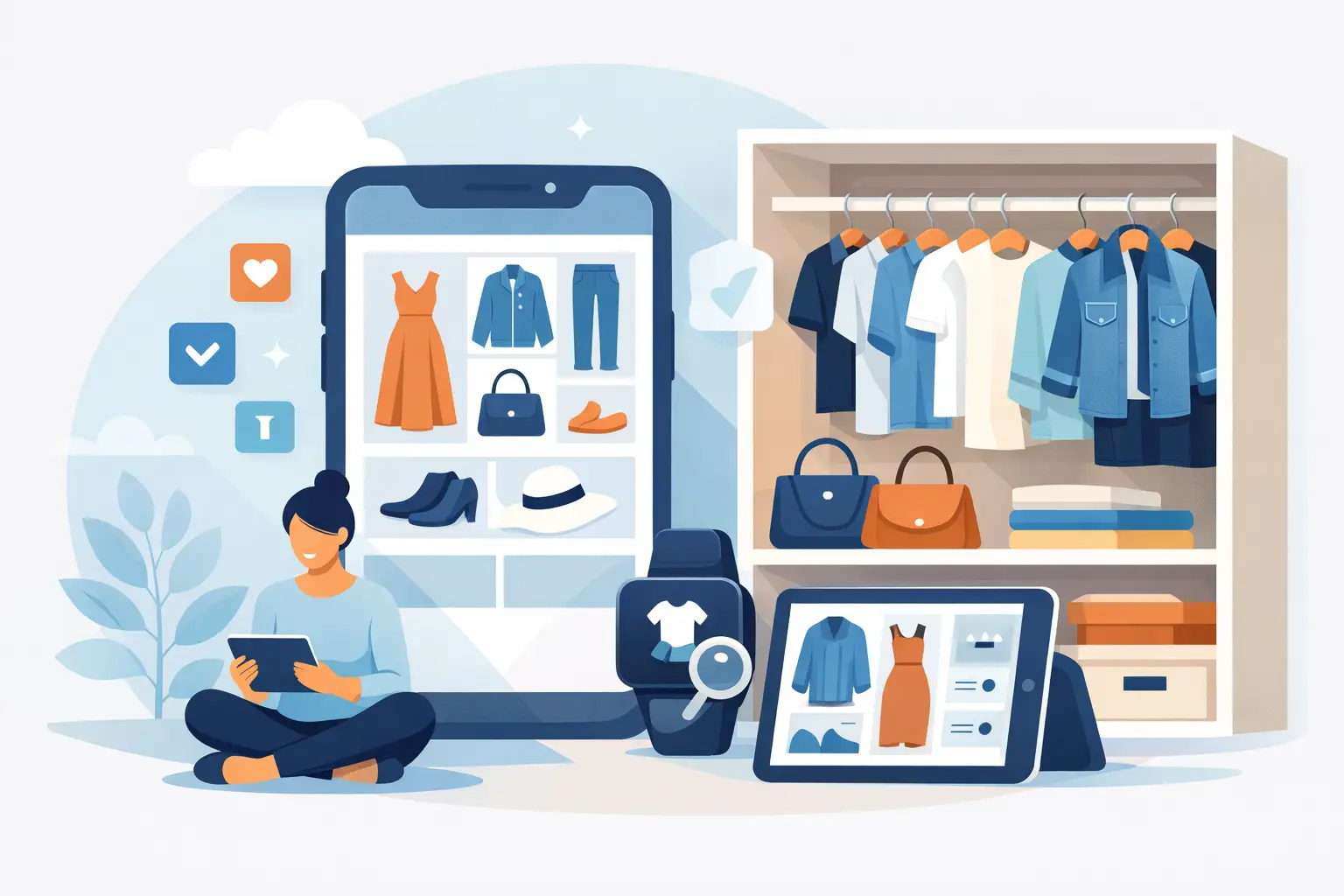
Your closet usually stops being the problem the moment you try to find one specific black top before work. That is where people start to review digital wardrobe apps for closet organization seriously - not as a fun extra, but as a way to save time, avoid duplicate purchases, and make better outfit decisions.
The category has grown fast. Some apps act like a catalog for what you already own. Some focus on styling and outfit planning. Others push into virtual try-on, shopping support, and AI recommendations. On paper, they all promise a cleaner closet and easier mornings. In practice, the right choice depends on one thing: what friction you want to remove.
A physical closet hides its own inefficiency. You forget what you own, you rebuy similar items, and you default to the same outfits because they are easy. A digital wardrobe app fixes that by turning your clothing into something searchable, visible, and usable.
That sounds simple, but the payoff is bigger than organization. When your closet lives in an app, you can build outfits faster, track what you actually wear, and shop with more confidence because you know what pieces need to match. For online shoppers, that matters. The less guesswork between your closet and a new purchase, the fewer returns you deal with later.
Still, not every app solves the same problem. Some are excellent at inventory and weak at inspiration. Some are visually polished but too time-consuming to maintain. Some are smart about recommendations but less convincing on privacy. The best review is not about picking one universal winner. It is about matching the app to your habits.
What separates a useful app from a pretty one
The first test is setup speed. If adding your wardrobe feels like a weekend project, many users quit halfway through. The strongest apps reduce friction with auto-background removal, category detection, barcode support, or retailer import. Manual entry can work, but only if the interface is fast enough that it does not feel like data entry.
The second test is visual clarity. You should be able to open the app and understand your wardrobe immediately. Clean grids, filters by category or season, and outfit boards make a big difference. If items are hard to crop, hard to tag, or hard to find later, the app becomes a storage bin instead of a tool.
Then there is the intelligence layer. Good apps do more than hold photos. They help you style what you own, plan outfits, or evaluate new purchases against your current wardrobe. This is where the category starts to split. Basic closet apps organize. Smarter apps support decisions.
Privacy also matters more than many users expect. A wardrobe app can include body photos, shopping behavior, and personal style history. If an app uses AI features or virtual try-on, users should know how images are handled, whether connections are encrypted, and whether photos are stored or deleted after processing. Convenience is great, but trust is non-negotiable.
The main types of digital wardrobe apps
Inventory-first apps are built for people who want control. They help you log clothes, sort categories, and sometimes track cost per wear or laundry status. If your main pain point is not knowing what is in your closet, this type works well. The trade-off is that it can feel administrative. You may get organization without much excitement.
Styling-first apps are aimed at users who already know what they own but want faster outfit ideas. These apps usually shine with lookbooks, outfit calendars, capsule planning, and mood-based combinations. They are useful for frequent outfit repeaters who want variety from the same pieces. The trade-off is that inventory depth may be lighter.
Shopping-first apps take a more forward-looking approach. Instead of just organizing your existing wardrobe, they help you decide what to buy next. Some compare new items against saved clothes. Some use AI to recommend complete looks. Some now include virtual try-on to show fit and style before you purchase. For online shoppers, this is where real value starts to show because closet organization becomes part of purchase confidence, not just post-purchase management.
Features worth paying attention to
Photo handling is more important than it sounds. If clothing images look messy, every other feature becomes harder to use. Strong apps make item photos look clean and consistent, either through automation or easy editing. Without that, outfit planning becomes visually noisy.
Search and filtering are another make-or-break area. A good app should let you find your white sneakers, cropped denim jacket, or interview outfit in seconds. Tags for season, occasion, brand, color, and fit are not glamorous, but they matter in daily use.
Outfit creation should feel fast. Drag-and-drop boards, suggested combinations, and saved looks help turn a wardrobe database into something practical. If creating one outfit takes too many taps, most users stop doing it.
Shopping integration is where stronger apps pull ahead. If you can see how a new item works with your existing closet before buying, the app stops being passive. It becomes a decision tool. That is especially valuable for shoppers who buy online often and want fewer misses.
And then there is virtual try-on. This is not the same as closet cataloging, but it is becoming part of the same workflow. If an app helps you visualize a garment on your body and save that look inside your wardrobe, it closes the gap between browsing, trying, buying, and organizing.
Where many wardrobe apps still fall short
The biggest issue is maintenance fatigue. Even a strong app can lose users if updating the closet feels constant. New purchases, donated items, seasonal changes, and worn-out basics all need attention. That means the best app is rarely the one with the most features. It is the one you will still use after month two.
There is also a realism problem in some AI-driven apps. Recommendations can be stylish but disconnected from your actual life. A great digital wardrobe app should understand that users need outfits for class, commuting, office days, and last-minute dinner plans - not just polished content-worthy looks.
Another weak point is fit confidence. Many apps can show what is in your closet, but fewer can help you understand how a new item might actually look on you. That gap matters because poor shopping decisions create closet clutter in the first place. If organization starts after a bad purchase, the app is solving the problem late.
How to choose the right app for your habits
If you want a cleaner system for what you already own, choose an app with fast upload, strong search, and simple outfit building. Do not overpay for advanced features you will not use.
If you are style-driven and love experimenting, prioritize recommendation quality and visual layout. The app should make outfit planning feel quick and fun, not like filing receipts.
If you shop online often, look harder at try-on support, saved looks, and purchase planning. This is where an app can reduce real friction. Seeing how potential purchases fit with your current wardrobe can cut returns, stop duplicate buys, and make new pieces easier to wear right away.
For users who care about security, read the privacy promises carefully. Encrypted processing and automatic photo deletion are meaningful advantages, especially when body images are involved. A smart app should feel safe as well as useful.
A stronger standard for closet apps
The best way to review digital wardrobe apps for closet organization now is to ask a higher-level question: does this app only document my closet, or does it help me make better decisions? That distinction matters.
A closet app that stores photos may keep you organized. A closet app with styling support may keep you inspired. But a closet app that helps you evaluate fit, visualize outfits, and save the results in one place starts to improve the full shopping cycle. That is a much bigger win.
This is why the category is shifting toward AI. Not because AI sounds impressive, but because users want speed and certainty. They want to know if a piece works before they order it. They want to test looks without dragging half their closet onto the bed. They want results in seconds, not another task to manage.
That is also where a product like Prova fits naturally into the conversation. Its advantage is not just digital organization. It is the combination of near-instant virtual try-on, outfit saving, and privacy safeguards like encrypted connections and automatic photo deletion. For shoppers who want to move from guesswork to visual proof, that changes what a wardrobe app can do.
A useful digital wardrobe app should make your closet feel smaller in the best way - clearer, easier, and more usable. If it saves you time, helps you buy smarter, and gives you confidence before the checkout page, it is doing more than organizing. It is making your entire wardrobe work harder for you.