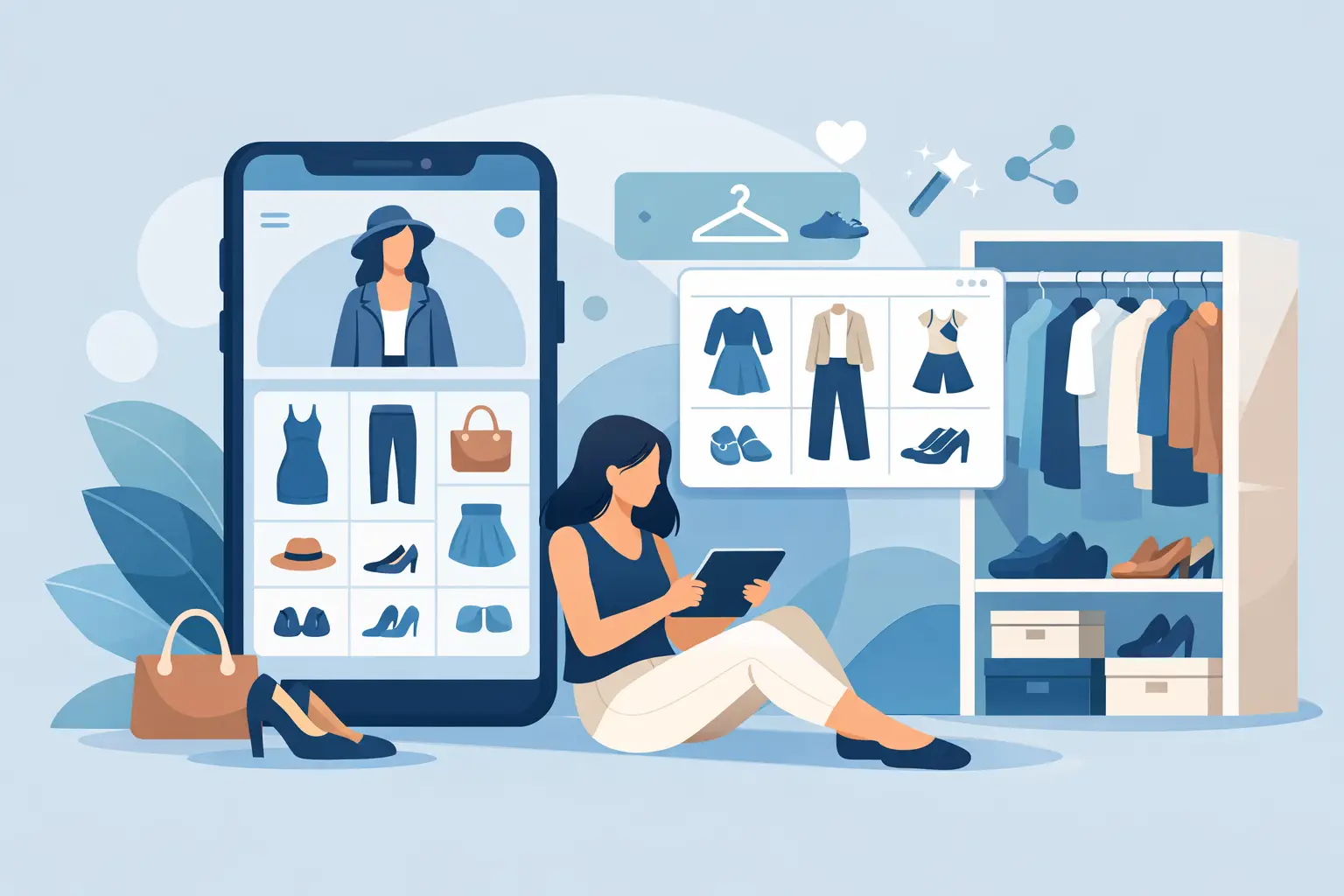
A screenshot gallery of your outfits is nice. It is not enough. If you are using a digital closet app to make better shopping decisions, the real test is simple: does it help you decide what to wear and what to buy with less guesswork?
That question matters because most people do not need another place to save inspiration. They need faster clarity. They want to know whether a jacket works with what they already own, whether a new dress fits their style, and whether an online purchase is worth the risk before they tap Buy Now. A digital closet app earns its place when it cuts friction, not when it adds another layer of organization.
What a digital closet app is really for
At its best, a digital closet app is not a fashion scrapbook. It is a decision tool. It helps you see your wardrobe clearly, test outfit ideas quickly, and shop with more confidence.
That sounds obvious, but a lot of apps stop at cataloging. They let you upload clothing photos, tag colors, and build boards. Useful, yes. Game-changing, not always. For some users, that level of organization is enough. If your main problem is forgetting what is in your closet, a simple inventory app can work.
But if your real problem is uncertainty - how something will look on you, what matches, whether a purchase will get worn - then organization alone will not solve it. You need visual proof.
The gap most closet apps still leave open
Here is where many tools fall short. They can tell you what you own, but they cannot show you how a new item will actually look on your body. That is the gap between planning an outfit and trusting it.
For online shoppers, that gap is expensive. Product photos are styled on someone else, under controlled lighting, with a fit that may not resemble yours at all. Size charts help, but only up to a point. Reviews can be inconsistent. And returns are not just annoying. They cost time, delay your decisions, and turn shopping into cleanup.
A strong digital closet app should close that gap. It should help you move from "maybe this works" to "yes, this is worth it" in seconds.
The features that actually matter
The most useful apps share one trait: they respect your time. That means the core experience has to be fast, visual, and low effort.
First, outfit visualization matters more than endless manual input. If an app expects you to crop every item perfectly, enter detailed tags, and build every look from scratch, many people will quit before they get value. Detailed wardrobe management appeals to some fashion enthusiasts, but most shoppers want speed.
Second, realistic try-on changes the equation. This is where AI becomes practical, not just flashy. When you can upload a full-body photo and see how clothing overlays on your own shape, shopping gets more precise. You are no longer imagining a fit based on a model. You are evaluating it on yourself.
Third, saved looks need to be useful, not passive. A built-in wardrobe should let you revisit combinations, compare options, and keep promising outfits in one place. That is especially helpful when you are deciding between items, planning for events, or trying to stop impulse buys.
And fourth, privacy is not optional. Any app that handles personal photos should make security clear. Encrypted processing and automatic deletion are not extra perks. They are baseline trust features.
Why AI makes a digital closet app more useful
AI gets overhyped when it is attached to vague promises. In this category, the value is more concrete. Good AI shortens the distance between curiosity and confidence.
If you can test a look in about 10 seconds, you are far more likely to use the tool regularly. Speed matters because style decisions are often small, frequent decisions. You are comparing tops before work. You are checking if a coat justifies the price. You are seeing whether a trend fits your actual wardrobe or only looks good in a post.
Accuracy matters just as much. A digital closet app with realistic virtual try-on can reduce the mental math shoppers usually do. Instead of guessing whether proportions work, whether a hem hits right, or whether a color flatters you, you get a visual answer.
There is still a trade-off here. No digital experience replaces fabric feel, exact tailoring, or the way a garment moves in real life. If you are buying formalwear, premium denim, or anything with a very specific fit requirement, you may still want an in-person check. But for everyday shopping, strong AI can remove a huge amount of uncertainty.
A digital closet app should help before and after purchase
A lot of wardrobe tools focus on one side of the equation. They are either shopping apps or closet organizers. The best experience connects both.
Before purchase, the app should help you evaluate whether an item fits your style and works with what you already own. That can stop duplicate buys, random sale grabs, and those purchases that look exciting for one day and stale by the next week.
After purchase, the app should help you get more wear out of what you own. Saved outfits, recommendations, and easy outfit recall all make your wardrobe feel larger without adding more clothes. That is useful whether you are highly fashion-focused or just trying to get dressed faster.
This is also where a product like Prova stands out. It combines virtual try-on with a built-in wardrobe, so the app is not just about testing one item and moving on. You can save looks, revisit them, and make the app part of your everyday shopping routine instead of a one-time novelty.
Who gets the most value from this kind of app
Frequent online shoppers are the obvious fit. If you buy clothes from your phone, compare brands often, or hate return trips, a digital closet app can pay for itself in saved time alone.
But the value goes beyond heavy shoppers. College students can use it to stretch a smaller wardrobe. Busy professionals can make quicker morning decisions and shop with less second-guessing. Style-focused users can experiment more freely because trying a look digitally is faster than ordering three versions and hoping one works.
Even practical shoppers who do not care much about fashion benefit when the app reduces mistakes. You do not need to love styling to want fewer bad purchases.
What to watch out for when choosing one
Not every app that calls itself a closet solution delivers the same result. Some are strong on organization and weak on visualization. Others look impressive at first but feel slow after a few sessions.
Look for a product that can do three things well: show clothing on you, save outfits in a way that stays useful, and keep the whole process fast. If it misses one of those, the experience can start feeling like work.
Also pay attention to trust signals. If photo handling is vague, that is a problem. Shoppers are right to be cautious. Clear security practices make adoption easier because you know what happens to your images.
And be honest about your own habits. If you love cataloging every item in your closet, you may want deep organization tools. If you mostly want confidence before checkout, prioritize visual try-on and speed.
The real standard going forward
The category is changing. A digital closet app used to mean storage, tags, and outfit boards. Now the standard is higher. People want to see, test, save, and decide in one place.
That shift makes sense. Shoppers are not looking for more effort. They want fewer bad buys, fewer returns, and faster outfit decisions. The apps that win will be the ones that feel like a practical advantage the moment you open them.
If an app can help you see a look on your body, store your best outfits, and make shopping feel more certain in seconds, it is doing the job. If it only helps you archive clothes you already forgot to wear, it is probably just a prettier version of the problem.
The best wardrobe tech should leave you with less hesitation and more clarity every time you get dressed.