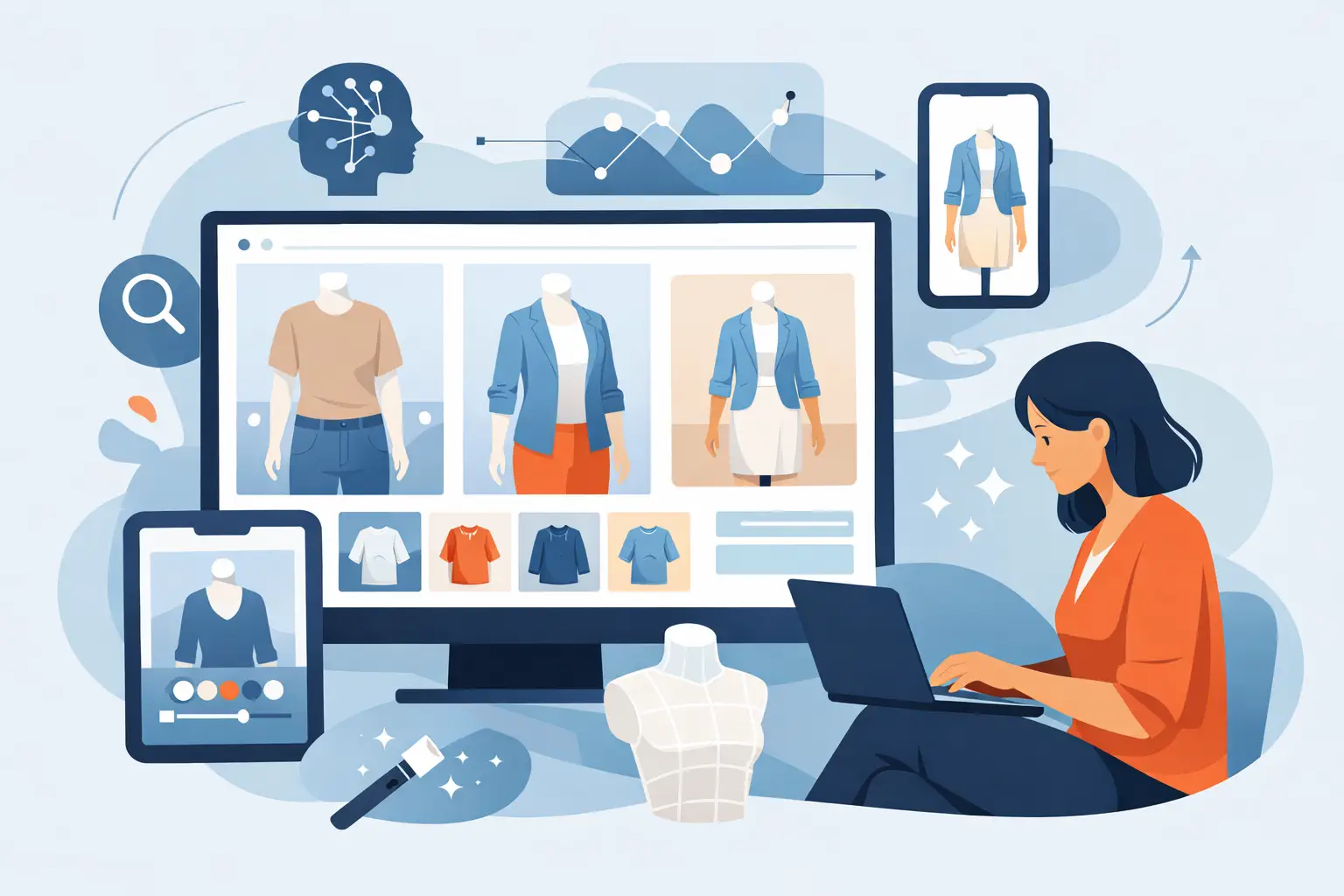
You can tell within seconds when a clothing app is actually useful and when it is just a gimmick. If you upload a photo, wait too long, get a blurry result, or cannot tell whether the garment would really work on your body, the app has already failed its job. That is the real standard to use when you review AI clothing visualization apps - not flashy demos, but whether they help you make faster, smarter purchase decisions with less guesswork.
Most shoppers do not need a lab-grade explanation of computer vision. They need a simple answer: will this help me decide what to buy? The best apps reduce uncertainty in three places at once - fit, styling, and confidence. You should be able to see how a piece sits on your shape, how it looks with your proportions, and whether it matches the rest of your wardrobe.
That sounds obvious, but many apps only solve one part of the problem. Some are strong at generating polished fashion images but weak at realistic try-on. Others are decent at overlaying a garment but fail when body position, lighting, or fabric details get more complicated. A good review has to separate visual novelty from actual shopping utility.
Speed matters more than many reviews admit. If the result takes too long, people stop using it. For a consumer app, near-instant output changes behavior. It turns virtual try-on from a one-time experiment into something you actually use before checking out.
Realism is the next filter. The image does not need to be perfect, but it does need to be believable enough to answer practical questions. Does the jacket look boxy or fitted on you? Does the dress length feel right on your frame? Does the color work with your skin tone? If the app cannot answer those questions clearly, it is entertainment, not decision support.
The core features worth checking
The strongest AI clothing visualization apps usually get four things right.
First, they make photo upload easy. Full-body input should be straightforward, with clear guidance on pose and framing. If an app requires too much manual correction, its convenience disappears fast.
Second, they process quickly. A result in about 10 seconds feels useful. A result that takes a minute feels like work.
Third, they preserve enough garment detail to make the image actionable. Texture, drape, sleeve length, and silhouette all matter. Shoppers are not just checking whether something looks "good." They are checking whether it looks right.
Fourth, they handle privacy like a real product, not an afterthought. Since users are uploading personal photos, encrypted transfer and automatic photo deletion should be part of the review criteria, not buried in fine print.
If the app also includes outfit saving, wardrobe organization, or style recommendations, that is a meaningful bonus. It extends the experience from single-item try-on to actual outfit planning, which is closer to how people shop in real life.
Realism versus inspiration
This is where reviews often get sloppy. There is a difference between an app that helps you imagine possibilities and one that helps you decide what to buy.
Some AI fashion tools are built for inspiration first. They can generate attractive styling ideas, show trend-driven looks, or remix outfits in visually interesting ways. That can be fun and even useful for discovering new combinations. But if the body shape changes too much, the garment structure gets distorted, or the result feels more editorial than personal, the app is not delivering reliable try-on.
Other apps aim for practical realism. These tools focus on keeping your body proportions intact while placing clothing in a way that feels consistent with your pose and shape. The output may look less dramatic than a heavily stylized AI image, but it is often far more useful for shopping.
Neither approach is wrong. It depends on what you want. If your goal is outfit inspiration, a more generative app can work well. If your goal is reducing returns and buying with confidence, realism has to come first.
Where many apps still fall short
The weak points are predictable.
Fit interpretation is one. Even strong apps can struggle with complicated garments like oversized blazers, layered knits, pleated skirts, or anything with unusual structure. Loose silhouettes are harder to judge than body-hugging basics because there is more ambiguity in how fabric should fall.
Angle sensitivity is another. A front-facing image with clean lighting will usually produce better results than a casual mirror photo taken at an angle. That is not a dealbreaker, but it does affect consistency. The better apps are transparent about what kinds of photos work best.
Size certainty is also easy to overpromise. AI visualization can improve fit confidence, but it does not replace a size chart or fabric notes. An app may show that a style flatters you, but it cannot fully predict stretch, stiffness, or how a garment feels in motion. Smart reviews should say that clearly.
Then there is trust. Some apps ask users to upload personal images without giving enough reassurance about what happens to that data. For a category built around body photos, privacy is not optional. It directly affects whether people will try the product in the first place.
How to review AI clothing visualization apps like a real shopper
Start with a simple test set. Try a fitted top, a structured jacket, a dress or skirt with movement, and one item in a bold color or print. That mix reveals whether the app can handle silhouette, layering, detail, and styling range.
Use your own photo, not a model image. The point is to test whether the app helps with personal decision-making. Upload quality matters, so use a clear full-body shot with decent lighting and a natural stance.
Then look at the result with practical questions in mind. Does the garment sit in the right place on your body? Does the shape look believable? Would you trust this image enough to buy, save, or share the outfit? That final question is often the best one. If you would not act on the result, the app has limited value.
Pay attention to workflow too. Good AI is not only about output quality. It is also about how frictionless the path feels from upload to result to saved look. If you want to revisit options later, compare outfits, or build combinations from previous try-ons, those features matter because they support real shopping behavior.
A practical benchmark for this category
A strong app in this space should deliver realistic virtual try-on, fast processing, and clear privacy protection in one experience. That combination is still rarer than it should be. Many tools are good at one piece of the puzzle but not all three.
That is why product design matters as much as model quality. An app like Prova stands out when it treats virtual try-on as a complete consumer workflow: upload a full-body photo, see a realistic result in about 10 seconds, save looks to a personal wardrobe, and move on with more confidence. The added privacy signal - encrypted connections and automatic photo deletion - also addresses one of the biggest barriers to adoption.
This is the bigger shift happening in the category. The winning apps are not trying to impress users once. They are trying to become part of how people shop every week.
Who should use these apps, and who should not
If you shop online often, compare multiple styles before buying, or hate dealing with returns, AI clothing visualization apps can save real time. They are especially useful for trend-driven shoppers, people experimenting with new silhouettes, and anyone who wants a quick visual check before committing.
They are less helpful if you expect exact fit prediction down to every inch. AI can improve confidence, but it cannot fully replace trying on a garment in person, especially for premium fabrics, tailored pieces, or highly technical sizing.
The best mindset is to treat these apps as a strong pre-purchase filter. They can help you reject bad options faster, narrow your shortlist, and feel better about the items you do buy. That alone makes them valuable.
The standard is getting higher
A year ago, many shoppers would have forgiven weak realism because the idea itself felt new. That window is closing. Now the expectation is clear: fast output, believable try-on, secure handling of personal photos, and features that make the experience useful beyond a single image.
So when you review AI clothing visualization apps, do not ask whether the technology looks impressive. Ask whether it gives you enough visual certainty to buy with confidence. That is the test that matters, and it is the one that will separate the apps people try once from the ones they keep on their home screen.
The most useful fashion tech does not add more noise to shopping. It removes hesitation.