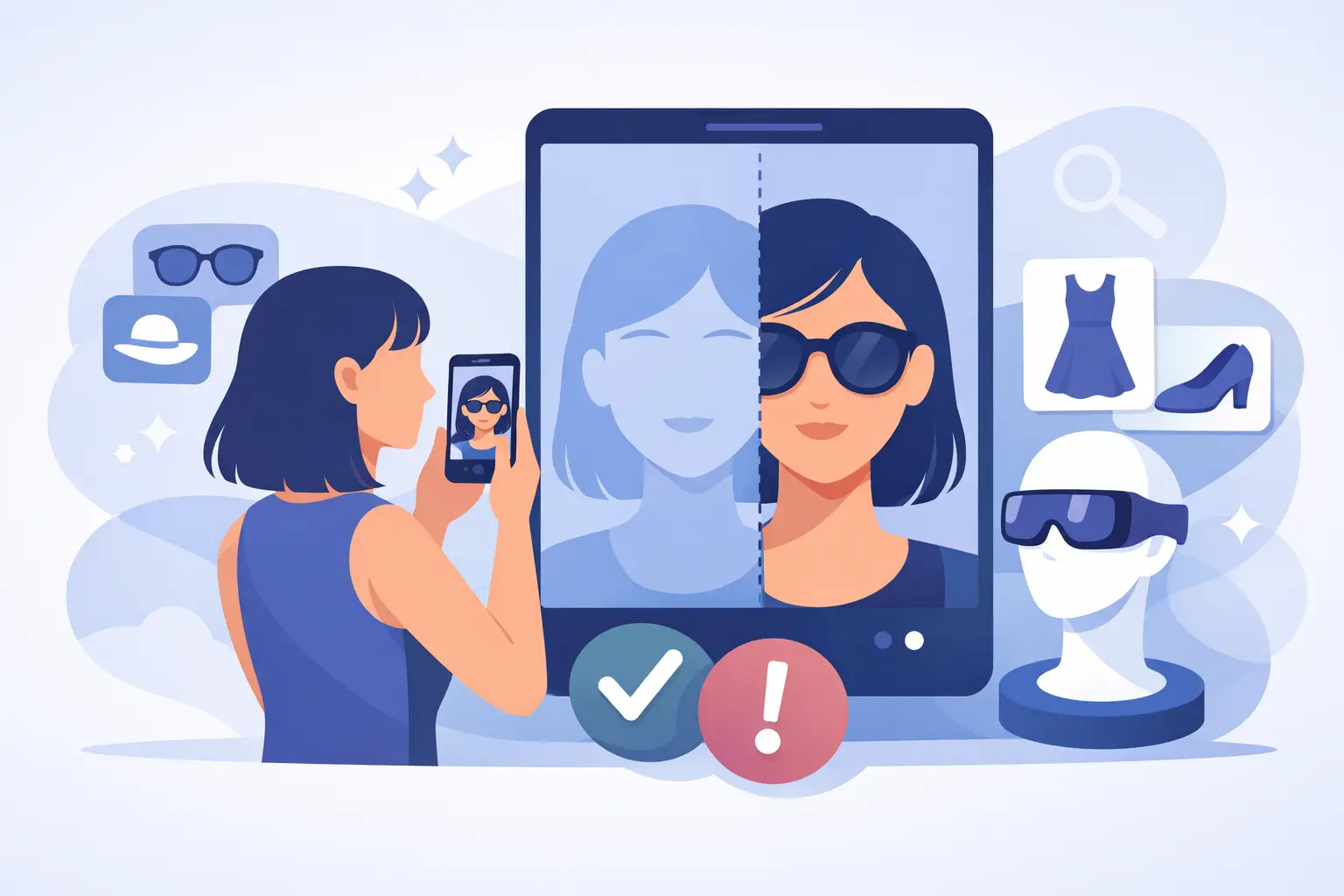
You find a jacket online, love the color, and then hit the same wall every shopper knows: will it actually look right on you? That is the real question behind does virtual try on work accurately, and the honest answer is yes - often impressively so - but accuracy depends on what you expect it to predict.
Virtual try-on is very good at showing visual style, proportion, and overall outfit impact. It can give you a fast, realistic preview of how a garment may look on your body before you buy. What it cannot do perfectly, every time, is replace the full experience of touching fabric, feeling stretch, or knowing exactly how a waistband will sit after three hours of wear. The smartest way to use it is not as a gimmick or a guess. It is a decision tool that cuts uncertainty down fast.
Does virtual try on work accurately for real shopping?
For most shoppers, the answer is yes in the ways that matter first. A strong virtual try-on system can show whether a silhouette suits you, whether a top cuts too long or too boxy, whether wide-leg pants balance your frame, and whether colors work with your skin tone and existing wardrobe. Those are the reasons many purchases fail in the first place.
Accuracy starts with the image model. If the app can understand your body shape from a full-body photo and map the garment onto that shape with realistic drape, the result becomes genuinely useful. That is where advanced AI makes the difference. It is not just pasting a shirt on a photo. It is estimating body contours, scale, alignment, and how the clothing should sit visually.
That said, not all virtual try-on tools are built the same. Some are closer to novelty filters. Others are designed as shopping tools with stronger garment rendering, faster processing, and more realistic fit visualization. If you have used an older or low-quality version before, your impression of the category may be outdated.
What virtual try-on usually gets right
The biggest win is visual confidence. Before checkout, you can see whether an item flatters your frame instead of imagining it on a model with completely different proportions. That alone can save a lot of bad buys.
It is especially reliable for outerwear, tops, dresses, and outfits where shape and styling matter most. A virtual fitting room can show whether a blazer sharpens your shoulders, whether a midi dress lands at a flattering point, or whether a monochrome outfit looks polished or flat. These are decisions people used to make by guessing from product photos.
Color matching is another strength. If you are deciding between cream, black, olive, and navy, virtual try-on can quickly show which one feels most like you. It also helps with outfit building, because seeing pieces together is different from imagining them separately. A saved look is often more useful than a mental note.
This is also why speed matters. If try-on results take forever, people stop experimenting. When results appear in around 10 seconds, it becomes practical to compare multiple options, test styling ideas, and narrow choices before spending money.
Where virtual try-on can still miss
The limit is not whether AI can create a realistic image. The limit is whether the shopper expects that image to answer every fit question.
A virtual try-on can show how skinny jeans look on your legs. It may not tell you whether the fabric feels restrictive when you sit down. It can suggest a sweater length on your torso. It may not fully capture how a thick knit bunches at the elbows or how a low-stretch material feels across the chest.
Garment data matters too. If the original product image is poor, flat, wrinkled, or incomplete, the output may be less precise. If a garment has unusual structure, transparent layers, fringe, sequins, or highly reflective material, rendering can be harder. The same goes for items where fit depends heavily on exact measurements, like bras, shapewear, or tailored suiting.
So yes, virtual try-on can work accurately, but accuracy has a lane. It is strongest for visual realism and styling decisions. It is less absolute when the question is tactile feel or millimeter-level fit.
What affects accuracy the most
A better question than does virtual try on work accurately is what makes it accurate enough to trust. Three things matter most: the user photo, the garment image, and the AI model behind the result.
A clear full-body photo gives the system more to work with. Good lighting, a straight pose, and clothing that does not hide your body shape too much usually improve results. If your image is dark, cropped, angled, or cluttered, the output may still work, but precision can drop.
Garment presentation matters just as much. Clean product imagery helps the system understand shape, sleeve length, neckline, and drape. If the source image is inconsistent, accuracy can suffer before processing even starts.
Then there is the engine itself. Strong AI models are better at body mapping, perspective correction, and realistic overlay generation. That is the difference between a try-on that looks believable and one that looks pasted on. When the processing is fast and the output is visually convincing, users are more likely to trust what they see and act on it.
Accuracy is not one thing
People often talk about accuracy like it is a single score. It is not. There is visual accuracy, styling accuracy, proportion accuracy, and fit prediction accuracy.
Visual accuracy means the garment looks realistic on your image. Styling accuracy means the outfit reflects how the piece actually works with your body and personal style. Proportion accuracy is about length, volume, and balance. Fit prediction accuracy is the hardest category because it overlaps with material behavior, manufacturing variation, and personal comfort.
This matters because a shopper does not need perfection in every category to make a better choice. If virtual try-on reliably tells you that cropped jackets suit you more than longline ones, or that one dress shape works better than another, it has already done useful work. That is how smarter shopping happens - not by promising magic, but by reducing avoidable mistakes.
How to get more reliable results
If you want virtual try-on to be as accurate as possible, treat it like a tool, not a shortcut. Start with a clean full-body photo. Make sure your stance is natural and your figure is visible. Then compare more than one option instead of looking at a single result in isolation.
It also helps to use try-on for the questions it answers best. Ask: Does this shape work on me? Is this length flattering? Does this color make sense? Would I actually wear this with what I already own? Those are high-value shopping decisions.
If you are between sizes or buying something very fitted, pair the visual try-on with the size chart and product details. That combination is where confidence jumps. The image helps you judge look and proportion. The product info helps you judge sizing risk.
For shoppers who buy often, saved outfits are useful too. When you can revisit looks side by side, you stop relying on memory and start comparing what actually works. That turns try-on from a one-time novelty into an everyday shopping system.
Why this matters beyond convenience
Returns are expensive, annoying, and usually predictable. A lot of them happen because the item did not look the way the shopper pictured. Virtual try-on addresses that exact problem. It gives people visual certainty before they commit.
That is why the best tools are built around speed, realism, and privacy together. If trying on a look takes too long, people quit. If the output looks fake, they do not trust it. If photo handling feels questionable, they will not upload at all. A strong experience has to check all three boxes.
Apps built for real-world use now process looks in seconds, protect user images with encrypted handling, and automatically delete photos after processing. That combination makes virtual try-on feel less like an experiment and more like a practical part of shopping. Prova is a strong example of that shift - fast enough for everyday use, realistic enough to guide decisions, and secure enough to feel comfortable using regularly.
The real value is simple. You spend less time guessing, less money on the wrong pieces, and less energy dealing with returns. You also get room to experiment a little more, which is where shopping becomes fun again.
So, does virtual try on work accurately? Yes, when you use it for what it does best: showing you how clothes are likely to look on your body before you buy. It will not replace fabric feel or perfect size prediction in every case, but it does something most product pages never could - it makes the decision personal. And once shopping gets more personal, it usually gets a lot smarter.