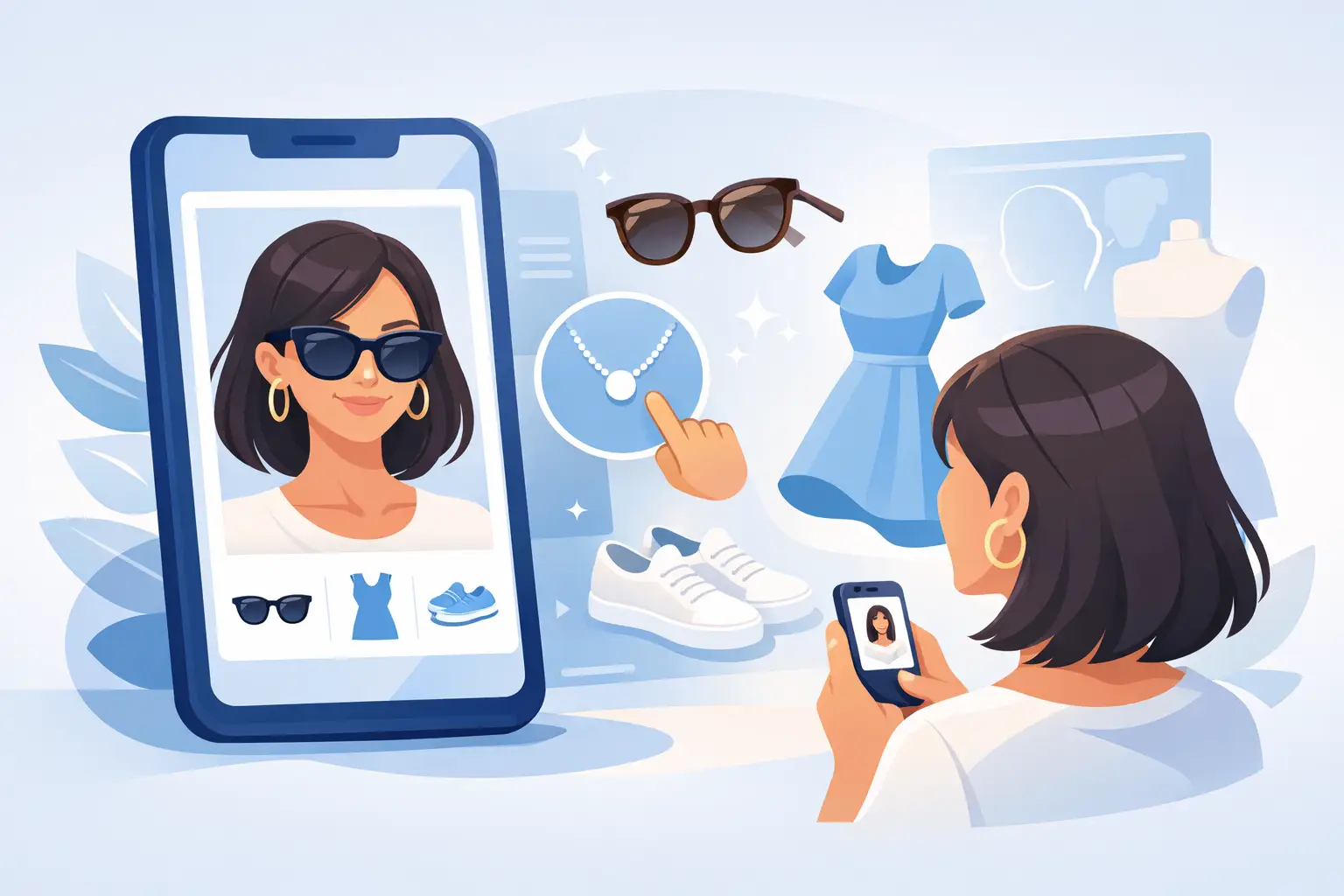
You find a jacket online, love it on the model, add it to cart, and then pause. Will the shape work on your shoulders? Will the length feel polished or awkward? That hesitation is exactly why photo based virtual try on matters. It replaces guesswork with a visual answer you can actually use before you buy.
For online shoppers, that changes the entire decision. Instead of reading sizing charts, opening ten tabs, and hoping customer photos tell the full story, you get a view of the item on your own body. Not a generic avatar. Not a rough sketch. Your photo, your proportions, your styling choices.
What photo based virtual try on actually does
At its simplest, photo based virtual try on uses AI to place digital clothing onto a real photo of you. You upload a full-body image, choose a garment, and the system generates a realistic preview of how that piece may look when worn. The best tools do this quickly and with enough detail to help you judge silhouette, balance, and overall outfit feel.
That speed matters more than it sounds. If the result takes too long or looks obviously fake, people stop trusting it. A good virtual fitting room has to be fast enough for real shopping behavior and accurate enough to support real decisions.
This is where the category has matured. Early try-on tools often felt like novelties. Clothing looked pasted on. Fit cues were vague. You could play with the feature, but you still could not buy with confidence. Modern AI systems are much better at reading body shape, layering garments onto photos, and preserving a natural look. The result is more useful, not just more impressive.
Why photo based virtual try on is catching on
The biggest reason is simple. Returns are annoying.
Most shoppers do not return clothes because they enjoy the process. They return them because the item looked different on their body than they expected. Maybe the waist hit too high. Maybe the sleeves changed the whole proportion of the outfit. Maybe the color was fine, but the shape was wrong. Product photos cannot solve that on their own because they show the garment on someone else.
Photo based virtual try on closes part of that gap. It helps you answer the question that matters most before checkout: can I actually see myself wearing this?
That is useful for fashion-forward shoppers experimenting with new looks, but it is just as valuable for practical buyers. If you are trying to replace work pants, compare dress options for an event, or decide whether a coat is worth the price, visual certainty saves time. It also reduces the mental friction that slows down online shopping.
There is a second reason this is growing fast. People expect instant feedback now. They do not want a long setup process, body scans, or complicated measurements for every item. Uploading a photo and getting a result in around 10 seconds fits the way people already shop on mobile.
What a good photo based virtual try on experience should include
Not every app or tool gets the basics right. Some are optimized for entertainment. Some are better for beauty than apparel. If you are using photo based virtual try on for actual shopping decisions, a few things matter a lot.
First, the output needs to look believable. That does not mean perfect down to every fabric fold. It means the garment should align with your frame, preserve the shape of the piece, and give you a realistic sense of proportion. If a blazer suddenly looks stretched or a dress loses its intended cut, the preview becomes less useful.
Second, it needs to be fast. A slow result breaks the shopping flow. Most people are comparing options, checking prices, and making decisions in short bursts. Waiting too long for each try-on turns a helpful feature into extra work.
Third, privacy cannot be an afterthought. You are uploading a personal photo. Shoppers should know how that image is handled, whether the connection is encrypted, and whether the photo is stored or deleted after processing. Trust drives usage here. If users feel uncertain about what happens to their image, they will not come back.
Fourth, the best tools go beyond one-off previews. Saving outfits, revisiting looks, and comparing options later make the experience more practical. Shopping decisions are rarely made in one glance. People want to test combinations, think about them, and sometimes share them before buying.
Where photo based virtual try on helps most
This technology is strongest when appearance and styling are part of the purchase decision.
Outerwear is a clear example. Coats, blazers, and jackets change your silhouette in obvious ways, so seeing them on your body helps quickly. Dresses are another strong use case because line, length, and shape matter more than isolated product shots can show. Tops, knitwear, and outfit layering also benefit because the shopper is often judging the full look, not just the item.
There are limits, and that is worth stating clearly. Photo based virtual try on is excellent for helping you assess style, proportion, and visual fit. It is not a perfect replacement for fabric feel, exact stretch, or every detail of physical construction. If you are choosing between two sizes in a very technical garment, sizing data still matters. The smart use case is not AI versus all other shopping tools. It is AI plus product details, so you can decide faster with better evidence.
The real advantage is confidence, not novelty
A lot of people hear AI try-on and think of it as a fun extra. It can be fun, but that misses the bigger point.
The real value is confidence at the moment it matters most. Right before purchase, shoppers want reassurance. They want fewer unknowns. They want to know whether a piece matches their style, whether it works with what they already own, and whether they are about to make a return trip to the post office.
That is why the strongest photo based virtual try on experiences are built like practical shopping tools, not gimmicks. They focus on realistic output, clean mobile flow, and features that support decision-making. A wardrobe-saving feature, for example, is not just a nice add-on. It helps users compare, organize, and come back to looks without starting over.
That same logic applies to style suggestions. When AI can show the item on your body and then recommend ways to wear it, the experience becomes more useful. It supports the full purchase journey, from hesitation to selection to outfit planning.
What shoppers should watch for before trusting a result
Even strong AI previews should be read with a little judgment. Lighting in your original photo affects the output. A full-body image with clear posture and visible clothing lines usually creates a better try-on result than a dark mirror selfie cropped at the knees. Better input leads to better visual feedback.
You should also pay attention to what question you are asking. If you want to know whether a wide-leg pant suits your proportions, a virtual try-on can help a lot. If you want to know whether the fabric feels thick enough for winter, it cannot answer that. The best outcomes happen when shoppers use the tool for what it is designed to do.
That is also why accuracy claims should be paired with transparency. A trustworthy product makes the process clear, keeps expectations grounded, and protects user data. Those are not side benefits. They are part of the product.
A smarter standard for online shopping
As this category improves, shoppers will expect more than static product images. They will expect to test looks on themselves before buying, especially on mobile. That shift makes sense. It aligns with how people already make decisions - visually, quickly, and with as little friction as possible.
For brands and apps, the bar is no longer just having a try-on feature. The bar is making it accurate, fast, and secure enough to become part of everyday shopping behavior. That is where products like Prova stand out. When advanced AI technology can generate a realistic look in about 10 seconds, while keeping uploads encrypted and automatically deleted after processing, the feature becomes something people can trust and use often.
The best photo based virtual try on experience does not try to replace your judgment. It gives your judgment better input. And when shopping feels clearer, faster, and less risky, you make better choices with a lot less second-guessing.
The next time you hesitate over an item sitting in your cart, look for the tool that shows you the answer instead of asking you to imagine it.