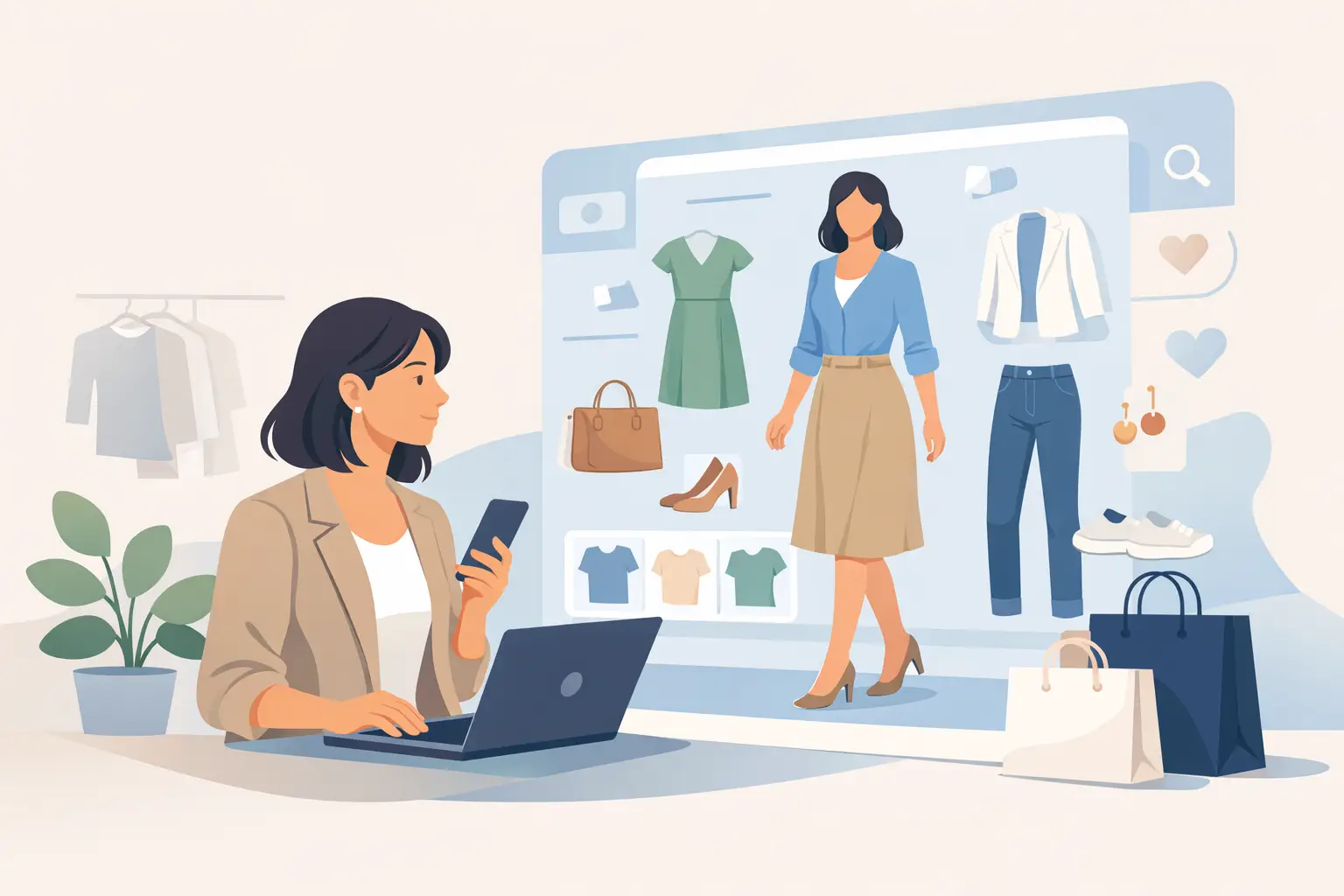
You know the moment. A dress looks sharp on the model, the jacket seems perfect in the product photos, and the color feels right until it arrives and somehow looks nothing like what you pictured on yourself. That gap is exactly why more shoppers want to know how to shop with outfit visualization. It replaces guesswork with a clear preview, so you can make faster decisions and feel better about what you buy.
Outfit visualization is simple in theory: you see clothing styled on your body before you check out. In practice, it changes almost every part of the shopping process. Instead of asking, “Will this work?” you start asking better questions like, “Does this shape balance my proportions?” “Does this color do anything for me?” and “Will I actually wear this with what I already own?” That shift matters because most bad purchases are not total misses. They are near misses. Close enough to buy, not right enough to keep.
Why shopping changes when you can see the outfit
Traditional online shopping trains you to buy from fragments. One product page shows one item, one angle, one styled look, and usually on one body type that is not yours. You are expected to mentally rebuild the outfit, predict the fit, and imagine the final result. That is a lot of work for something as routine as buying jeans or a top for the weekend.
Outfit visualization cuts through that friction. When you can preview the full look on your own photo, you make decisions with visual proof instead of hope. That does not mean every prediction is perfect. Fabric movement, exact texture, and fine details can still vary. But for silhouette, proportion, color harmony, and overall styling, visualization gets you much closer to reality than static product images ever could.
That is the real value. It is not only about making shopping more fun, though it does that too. It is about reducing uncertainty before you spend money.
How to shop with outfit visualization step by step
The smartest way to use outfit visualization is not to treat it like entertainment alone. Use it as a decision tool. Start with a clear photo of yourself in fitted clothing, taken in good lighting, standing straight. If the image is clean and full-body, the result will usually be more useful. Better input gives you better output.
Next, choose the item you are actually considering buying. This sounds obvious, but many shoppers start by trying random pieces and get distracted. Begin with the real decision in front of you - the blazer you need for work, the sneakers you want for daily wear, or the dress you are considering for an event. Visualize that item first, then compare nearby alternatives only if you need a second opinion.
After that, look beyond whether you simply “like it.” Ask whether the item works with your shape, your height, and your existing wardrobe. A top can be attractive on its own and still be a poor buy if it clashes with the pants, shoes, or outerwear you already wear most. Outfit visualization helps you catch that early.
Then test variations. Try a different color. Try a different rise. Try a more relaxed or more structured version of the same idea. This is where visualization becomes especially practical. You can compare options in minutes instead of ordering three versions and returning two.
Finally, save the looks that pass the test. Building a small bank of approved outfits makes future shopping easier because you stop buying isolated pieces. You start building combinations you already know work.
What to look for in a visual preview
If you want better shopping decisions, do not judge a preview only by whether it feels flattering at first glance. Pay attention to proportion. Does the jacket cut off at a good point on your torso? Do wide-leg pants balance the top, or do they overwhelm your frame? Is the hemline helping the outfit feel intentional?
Color is the next filter. Product photos often distort color, and even when they are accurate, a shade that looks great on a hanger may not work the same way against your skin tone or hair color. Visualization gives you a more realistic sense of contrast and overall effect.
Styling potential matters too. A single dramatic piece may look great in isolation and still be low value if you can only wear it one way. The better buy is often the item that creates three strong outfits instead of one perfect one. Visualize the piece with casual shoes, dressier shoes, and layers. If it keeps working, it is probably worth your money.
Comfort is the one area where visualization has limits. You still cannot feel scratchy fabric, stiffness, or stretch on a screen. So if you are deciding between two similar items, use visualization for appearance and use product details for wearability. The best results come from combining both.
How outfit visualization helps you spend less and return less
A lot of returns happen for predictable reasons. The cut looked different on your body. The color felt off once you wore it. The item did not match the rest of your closet. None of those problems are really about shipping or price. They are confidence problems.
When you shop with visual proof, you remove a big part of that risk. You can eliminate styles that fight your proportions, avoid impulse colors that do not suit you, and skip trend pieces that only work in the product shoot. This does not guarantee a zero-return life, because sizing and fabric still matter, but it usually leads to fewer mistakes.
There is a money angle here too. Smarter shopping is not just buying cheaper items. It is buying fewer wrong ones. An item you wear often is more affordable than a “deal” that sits in your closet with the tags on.
How to shop with outfit visualization for different goals
Your approach should change based on what you are buying. For basics, focus on repeat use. A white tee, dark denim, or neutral coat should earn its place by working across multiple saved outfits. If a basic only works in one narrow look, it is not really basic.
For event wear, the bar is different. You care more about impact, shape, and occasion fit. Visualize the whole outfit, not just the hero item. Shoes, layers, and accessories affect whether a look feels polished or unfinished.
For trend-driven pieces, use a stricter filter. Ask whether the item still works if the trend cools off next season. Visualization helps because you can see whether the piece looks like your style or just like someone else’s styling idea. That difference saves a lot of regret.
For in-store shopping, the same logic applies. If you are between options in a fitting room or standing in front of a rack, using a virtual try-on tool can help you compare quickly without changing in and out of multiple looks. That speed matters when you want a confident answer, not a long shopping session.
The privacy and trust side matters more than people admit
Using a photo-based shopping tool only makes sense if the experience feels secure. That is not a side benefit. It is part of the product. If you are uploading personal images, you should expect encrypted processing and automatic photo deletion after the result is generated. Anything less creates hesitation, and hesitation kills adoption.
Speed matters too. If a preview takes forever, people stop using it for real decisions. The best outfit visualization tools give you a realistic result in seconds, so the process feels like shopping support, not extra work. That is where solutions like Prova stand out - fast processing, realistic try-on output, and privacy protections that make the experience easier to trust.
Common mistakes that make outfit visualization less useful
The biggest mistake is using a poor photo and then blaming the result. Bad lighting, awkward posture, oversized clothing, or a partial-body image can distort the preview. A second mistake is over-focusing on one item and ignoring the outfit around it. Most purchases fail because the full look does not come together.
Another common problem is treating every visualization as a yes-or-no verdict. It is better used as a filter. If a piece looks wrong in preview, that is valuable. If it looks promising, that is your signal to check sizing, materials, and price before buying.
And there is one more trap: chasing novelty. Virtual try-on makes experimentation easy, which is great, but easy experimentation can turn into random shopping if you are not careful. Save looks with a purpose. Compare with intention. Shop for your life, not just for the preview.
The best part of outfit visualization is not that it makes fashion more high-tech. It makes shopping more honest. You see more before you buy, you second-guess less after, and your closet starts reflecting choices you actually meant to make.