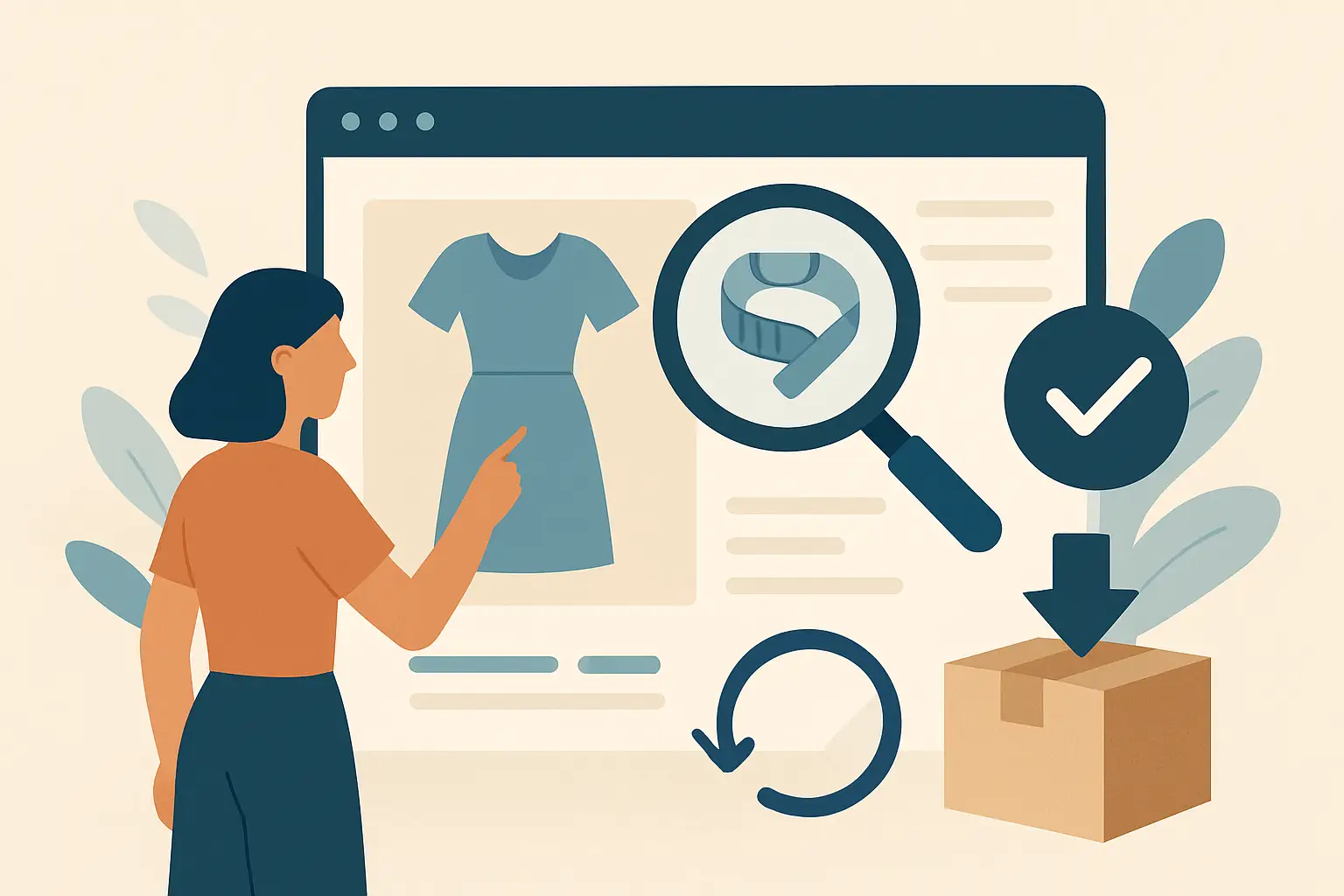
You know the moment: the package arrives, the outfit looks perfect on the product page, and then it’s… not. The shoulders sit weird. The waist is fine standing up but tight when you sit. The color reads different in your lighting. So you start the return.
If you shop online often, returns can feel like a second job. And while some returns are unavoidable, most come from a handful of predictable problems: sizing inconsistency, unclear fit, and “I can’t picture this on me.” The good news is you can reduce clothing returns online without buying less or settling. You just need a more intentional process before you hit Buy.
Why clothing returns happen (and why “size charts” aren’t enough)
Most shoppers blame themselves when something doesn’t fit. In reality, apparel sizing is a moving target. Two brands can label the same garment “Medium” and mean totally different measurements. Even within one brand, a relaxed fit tee and a fitted tee can share a size label but wear completely differently.
Then there’s fabric behavior. A stiff denim jacket will feel smaller than a drapey one at the same measurements. Knit stretches, linen relaxes, and some “structured” pieces only work if your proportions match the pattern.
And finally, online shopping is missing the one thing dressing rooms give you instantly: a full-body read. Not just “does it zip,” but “does it look like me.” That gap drives the try-and-return cycle.
Reduce clothing returns online by upgrading your “inputs”
Online shopping is basically a prediction game. Your job is to feed the prediction better data.
Start with your own measurements, but make them practical. Grab a tape measure and note bust, waist, hips, and inseam, plus one that people forget: shoulder width. Shoulders are a top reason items look “off” even when they technically fit.
Now take it one step further: measure clothing you already love. That’s the fastest way to translate numbers into real-world fit. A pair of jeans you wear constantly has a waist measurement and a rise you already know you like. A blazer you feel sharp in has a shoulder and chest width that works for your frame.
This matters because many product pages list garment measurements (when they’re doing it right). When you compare garment-to-garment, you’re no longer guessing how “true to size” translates.
The trade-off
Measuring takes a few minutes up front. But it saves hours of return prep later, especially if you shop weekly or buy for events.
Read product pages like a power shopper
If you want to reduce clothing returns online, stop treating the product page like a gallery and start treating it like a spec sheet.
Focus on three things:
First, fabric and stretch. Look for words like “rigid,” “non-stretch,” “holds shape,” or “compression.” Those are your warning signs to size with caution. If the page doesn’t mention stretch at all, assume there isn’t much.
Second, fit language. “Relaxed,” “oversized,” and “boxy” are not synonyms. Oversized usually means extra room everywhere. Boxy often means wider body with shorter length. Relaxed can mean a little extra ease but still shaped. This is where returns happen: people expect “relaxed” and get “tent.”
Third, model context. Model height is helpful, but only if the brand also lists what size they’re wearing and includes multiple angles. If the model is 5'10" in a Small and you’re 5'4", length and rise are likely to land differently.
A quick decision rule
If the page doesn’t clearly show the silhouette from front, side, and back, you’re taking on extra risk. That’s fine for basics. It’s not fine for statement pieces, formalwear, or anything with tailoring.
Make sizing less emotional with a simple “fit priority”
A lot of returns come from trying to force one item to satisfy every preference: snatched waist, room for hips, no gaping, long enough, and flattering from every angle. Some garments can do that. Many can’t.
Before you buy, pick your non-negotiable for that category.
For jeans, maybe it’s waist comfort when sitting.
For a blazer, maybe it’s shoulders and sleeve length.
For dresses, maybe it’s bust support or hip ease.
When you decide your priority, sizing choices get clearer. You stop buying the “aspirational size” and start buying the size that matches how you actually move.
The trade-off
Sometimes this means tailoring. If shoulders fit and the waist is slightly loose, that’s often fixable. If shoulders don’t fit, almost nothing else matters.
Use visuals that are about you, not the model
Most shopping advice tells you to look at reviews. Reviews help, but they’re inconsistent. People describe fit through their own lens. Someone saying “runs small” might mean “I wanted it oversized.”
Better is a visual check that maps clothing onto your body.
That’s exactly where virtual try-on changes the game. Instead of imagining how an outfit might look, you see it styled on your proportions. You can test silhouettes quickly, compare colors, and spot issues like length or balance before you order.
With Prova, you upload a full-body photo and get a realistic virtual try-on in about 10 seconds. The connection is encrypted, and photos are automatically deleted after processing, so you can use it confidently. The “My Wardrobe” feature also turns your best looks into a decision tool - save outfits you like, revisit them before you buy, and avoid ordering the same “almost right” item again.
Reduce clothing returns online by shopping in “outfits,” not single items
One of the sneakiest return reasons is not fit - it’s regret.
The item is fine, but it doesn’t work with what you own. The neckline clashes with your favorite jacket. The color doesn’t play well with your shoes. The vibe is wrong once you try to style it.
You can prevent this by doing a fast outfit test before purchase. Think in anchors.
If you’re buying a top, pick the exact jeans and shoes you plan to wear it with.
If you’re buying pants, choose the top you already own that must work.
If you’re buying a statement piece, decide whether it’s for daytime, work, or going out - and style it for that moment.
When you shop this way, you buy fewer “maybe” items and more “I already know when I’ll wear this” items.
The trade-off
This approach can curb impulse buys. If you love experimenting, keep that energy - just do it with intention. Experimentation is great; return fatigue isn’t.
Watch for the highest-return traps (and how to de-risk them)
Some categories are simply harder online. That doesn’t mean avoid them. It means change how you buy.
Tailored pieces (blazers, trousers, sheath dresses) need precision in shoulders, rise, and waist placement. Look for detailed garment measurements and model sizing, and be realistic about tailoring.
Light colors and shiny fabrics are lighting-sensitive. If you’re picky about exact shade, look for user photos taken indoors and outdoors, and expect a little variation.
Body-hugging knits can look amazing and feel restrictive. If the fabric description suggests compression, consider sizing up unless you want that held-in feel.
Shoes aren’t clothing, but they cause the same problem: inconsistent sizing. If the brand suggests sizing up or down, believe them.
Build a personal “return prevention” loop
If you want to reduce clothing returns online long term, treat each purchase like data.
When something works, record why. Was it the fabric? The cut? The rise? The neckline? Save the size and the product details somewhere you can find quickly.
When something fails, get specific. “Too small” isn’t actionable. “Waistband pinches when sitting” is. “Sleeves are too long and the shoulder seam drops” is. That kind of detail makes your next purchase smarter.
Over time, you’ll notice patterns. You might learn that you always need petite lengths, or that dropped-shoulder styles overwhelm your frame, or that you prefer mid-rise over high-rise even when high-rise is trending. That’s not being picky. That’s being efficient.
When returns are still the right move
Reducing returns is about fewer bad purchases, not forcing yourself to keep things you don’t love.
Return if the garment restricts movement, creates discomfort you’ll notice all day, or requires fixes that cost more than the item is worth. Also return if the color is meaningfully off for your wardrobe. You won’t suddenly start wearing a “close enough” shade.
And if you’re between sizes and the brand’s policy is generous, it can make sense to order two sizes for a high-stakes item, then return one. That does increase shipping and processing, so it depends on your priorities. If you’re trying to minimize waste, focus instead on better pre-purchase checks and fewer “coin flip” items.
The goal isn’t perfection. It’s confidence. When you can see fit and styling clearly before you buy, the whole experience changes - fewer boxes on the floor, fewer deadlines at the post office, and more outfits that actually make it into your life.