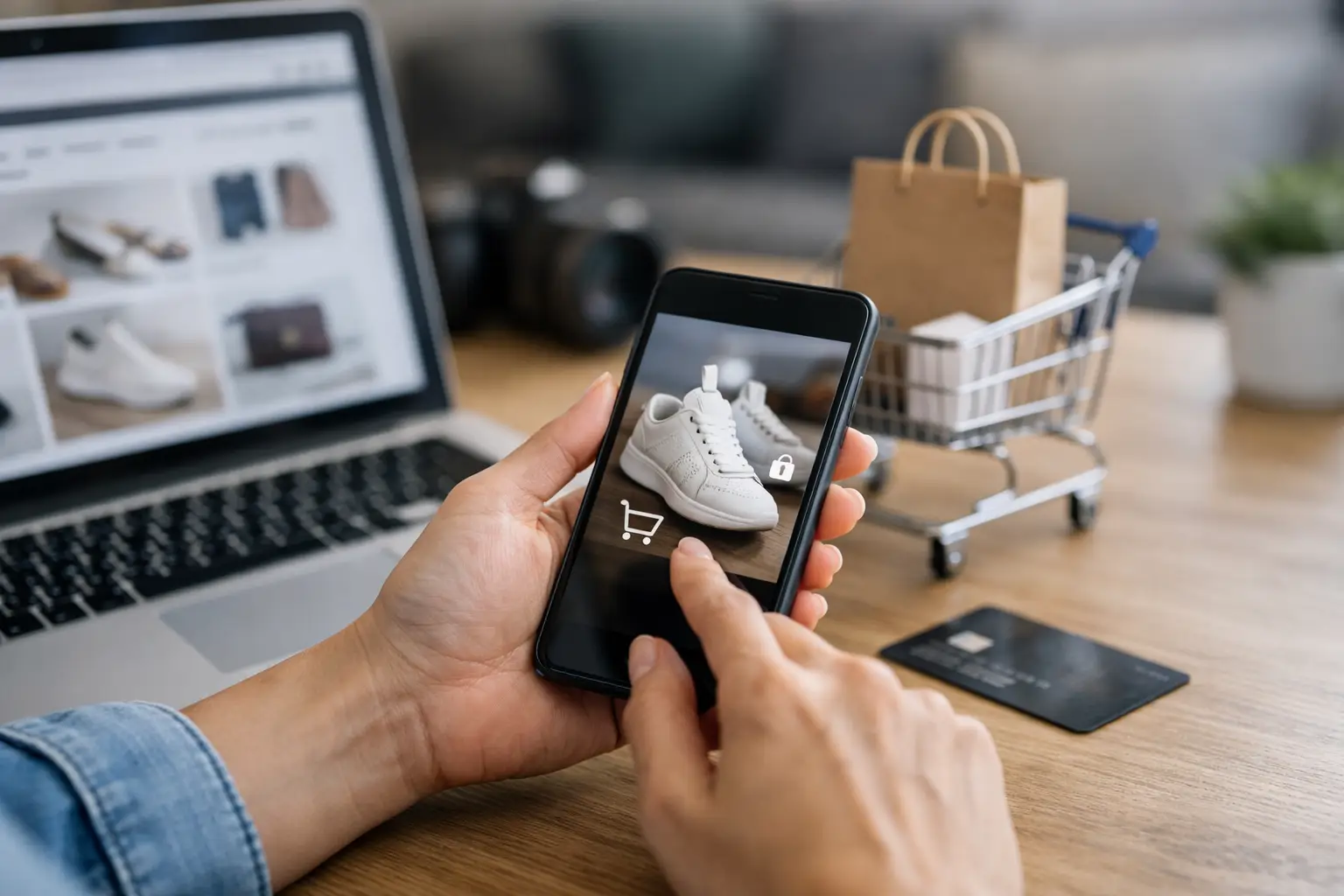
Buying clothes from a product page is easy. Trusting what happens to your photo after you upload it is the harder part. This guide to secure photo based shopping is for anyone who wants the speed of virtual try-on without handing over personal images blindly.
Photo-based shopping can save time, cut returns, and give you a much clearer sense of fit and style before you buy. It can also ask for something more personal than a size chart ever did: a real image of your body. That changes the standard for trust. If an app wants your photo, it should be clear about how that photo is transmitted, stored, processed, and deleted.
Why secure photo based shopping matters
A product photo is just product data. Your uploaded image is personal data. In some cases, it may reveal your face, body shape, home environment, device metadata, or other details you did not mean to share.
That does not mean you should avoid photo-based shopping. It means you should use it with the same standards you would apply to a payment app or banking tool. The right platform can give you stunning accuracy, fast try-on results, and strong privacy controls at the same time. The wrong one may be vague about what happens after upload, which is usually a sign to pause.
For most shoppers, the trade-off is simple. The more realistic the try-on, the more important the privacy design behind it. If a service promises advanced AI but says little about security, that gap matters.
What secure photo shopping should look like
Start with the basics. A trustworthy app should tell you, in plain English, whether your photo is encrypted during upload and processing. It should also explain whether images are stored permanently, temporarily cached, or automatically deleted after the result is generated.
Automatic deletion is one of the clearest trust signals. If a company only needs your image to create a try-on result, there should be a reason if it keeps that file longer than necessary. Some apps retain photos to improve their models or personalize future experiences. That may be useful, but it should be optional and clearly disclosed.
Speed matters here too. Faster cloud processing is not just convenient. It can reduce the amount of time sensitive data sits in a processing pipeline. If a try-on takes about 10 seconds instead of several minutes, that is a better user experience and, in many cases, a cleaner security model.
A practical guide to secure photo based shopping
The fastest way to shop safely is to check a few signals before your first upload. Look at permissions first. If an apparel try-on app asks for access that does not match the feature, that is a red flag. Camera or photo library access makes sense. Broad contact access or unrelated device permissions usually do not.
Next, look for direct privacy claims. Good apps do not hide behind vague language like "we value your privacy." They say what they do. Encrypted connections. Photos automatically deleted after processing. Limited retention. Clear control over saved looks. Those are specifics. Specifics build confidence.
Then check whether the app lets you control what you keep. Many shoppers want to save outfits, compare looks, and revisit favorites later. That is useful. It is different from saving the original uploaded photo forever. A strong setup gives you end-to-end outfit management while still minimizing exposure of the source image.
Finally, trust the product experience. If an app is well designed, it usually shows up in the details: clear consent screens, transparent settings, and a simple explanation of how your image is handled. Confusing language, hidden defaults, and hard-to-find deletion options are not small UX issues. They are trust issues.
How to evaluate an app before you upload
You do not need to be a security expert to make a smart call. You just need a short checklist.
Read the app store description and privacy notes. If security is central to the experience, it should be stated up front. Search for signs that the company understands shopper concerns, not just AI performance claims.
Check whether the app talks about deletion timing. "Automatically deleted after processing" is stronger than "may be stored securely." Both sound positive, but they mean very different things.
See if the value proposition matches the data request. If the app offers virtual try-on, style suggestions, and wardrobe saving, photo access is reasonable. If the request feels bigger than the benefit, skip it.
Pay attention to output quality. Low-quality overlays can create a second kind of risk: bad buying decisions. Security is not just about protecting data. It is also about making sure the product does what it promises so you are not still guessing on fit, shape, or styling after sharing your image.
Common privacy risks shoppers miss
Most people focus on the uploaded photo itself. That is only part of the picture. Background details matter too. Mirrors, family photos, room layouts, and location clues can show up in a full-body image. Before uploading, crop where possible and use a clean background if the app does not require your full surroundings.
Metadata is another overlooked issue. Some images carry hidden details such as time, device information, or location data. Many modern apps strip that automatically, but not all do. If you are cautious, take a fresh in-app photo rather than uploading an old image from your camera roll.
There is also the issue of reuse. A company may process your image for try-on and later use it for model training, marketing, or internal testing. That is not always malicious, but it should never be assumed. If reuse is part of the policy, it should be opt-in, not buried.
What good security feels like in real use
The best photo-based shopping tools do not make you choose between convenience and control. You upload once, get realistic results fast, and know exactly what happens next. Your connection is encrypted. Your image is processed quickly. Your source photo is automatically deleted if that is the stated policy. The looks you decide to keep stay in your account because you chose that, not because the app kept everything by default.
That balance is where the category is heading. Shoppers want visual certainty before buying, but they also want less friction and fewer returns. Security is part of that value, not a separate feature.
A well-built app can turn photo-based shopping into a practical daily tool rather than a one-time experiment. That is especially true for shoppers comparing multiple items, planning outfits, or managing saved looks over time. If the privacy foundation is strong, the whole experience feels lighter. You can focus on the clothes instead of wondering where your image ended up.
Smart habits for safer virtual try-on
Even with a strong app, your own habits still matter. Use photos that show what the tool needs and nothing extra. Avoid sharing images with other people in frame. Keep your account protected with a strong password or device security. Review saved content occasionally and delete outfits you no longer want stored.
It also helps to separate what you want from what the app wants. You may want personalized recommendations and a saved wardrobe. You may not want long-term storage of source photos. Those are different permissions. The best services recognize that difference and give you control over both.
If you want a benchmark for what modern shoppers should expect, look for a platform that combines advanced AI technology, near-instant results, encrypted processing, and automatic photo deletion. That combination is not a luxury anymore. It is the standard serious users should ask for. Prova is one example of that more secure, more useful model.
When secure photo based shopping may not be worth it
There are cases where it may not be the right move. If the app is unclear about retention, lacks visible privacy controls, or produces try-on results that do not look credible, the risk-reward balance shifts fast. You are sharing personal data without getting dependable shopping confidence in return.
The same goes for occasional shoppers who only need a rough style reference. In that case, static size guides and customer photos may be enough. Photo-based shopping makes the most sense when you buy often, care about fit and styling, and want faster decisions with fewer returns.
The point is not to avoid the technology. It is to expect more from it. Better AI should come with better safeguards, not more guesswork.
The easiest rule to remember is this: if an app is confident enough to ask for your photo, it should be confident enough to explain exactly how it protects it. Shop with that standard, and you will make better choices before you ever hit upload.