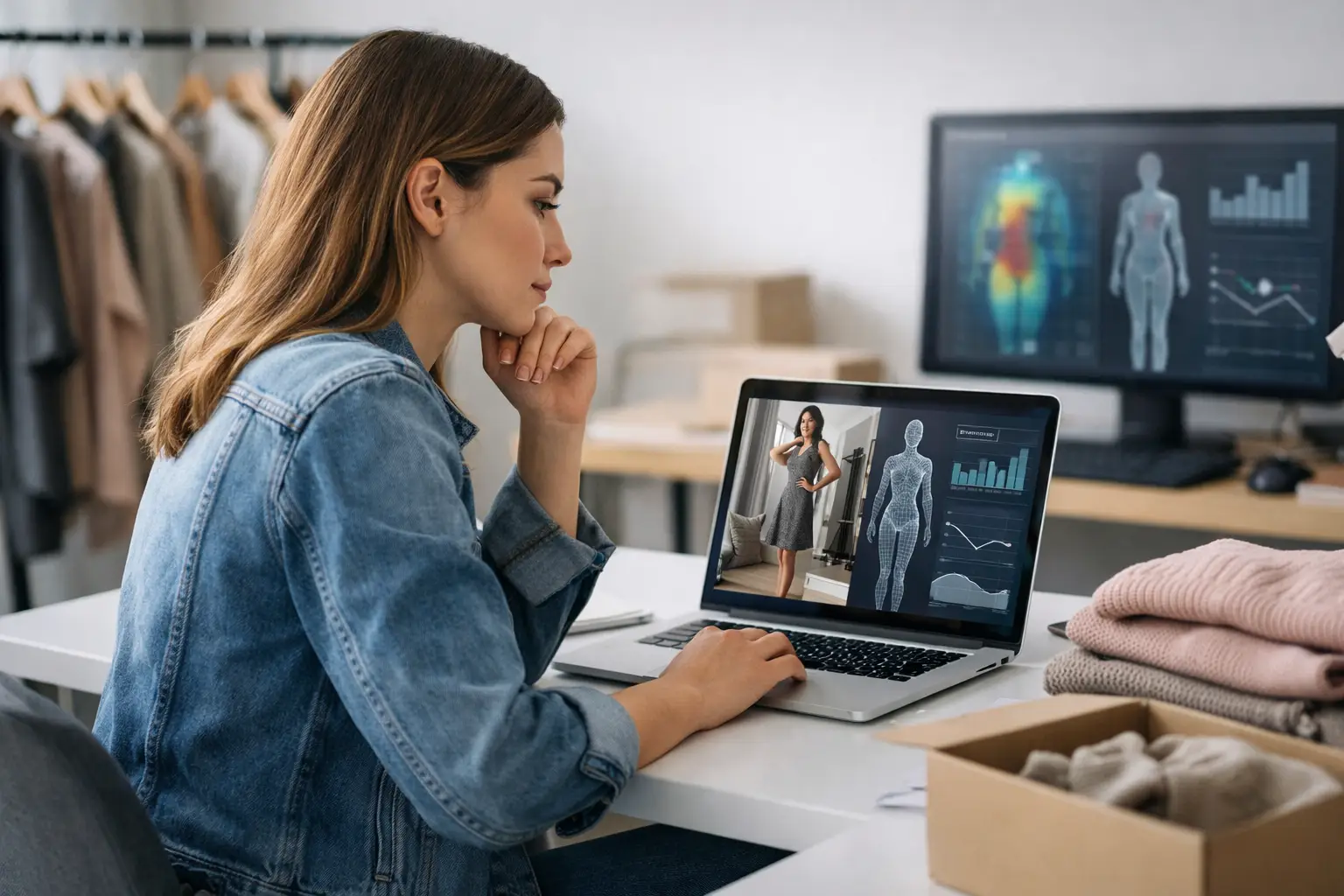
A shopper orders three sizes of the same dress, keeps one, and sends two back. That habit feels normal in apparel ecommerce, but it is expensive, slow, and frustrating. This case study on lowering apparel return rates with AI looks at what actually changes when shoppers can see clothing on their own bodies before they buy.
Apparel returns are rarely random. Most happen because the item looked different than expected, fit differently than the product page suggested, or simply felt too risky to keep. Traditional fixes like better size charts, more product photos, and customer reviews help, but they still leave the shopper doing guesswork. AI virtual try-on changes the decision point. Instead of asking, "Will this probably work?" the shopper gets a fast visual answer.
Why apparel return rates stay high
Fashion has a confidence problem. A product page can show the fabric, the cut, and the model measurements, but it still cannot answer the shopper's real question: what will this look like on me?
That gap matters more in apparel than in many other categories because body shape, proportions, styling, and personal preference all affect the outcome. A medium that looks perfect on one person may feel too short, too loose, or too boxy on another. Even when sizing is technically correct, the item can still miss the shopper's expectations.
This is why return reduction efforts often stall. Retailers improve information, but information alone does not create certainty. The shopper still has to translate model photography into a personal outcome, and that is where many purchases go wrong.
The case study: lowering apparel return rates with AI
Imagine a mid-size online apparel retailer with a familiar pattern. Return rates are highest in fitted tops, dresses, and occasionwear. Customer service logs show the same themes again and again: "didn't suit me," "looked different on," and "fit wasn't what I expected." Size exchanges are common, but so are preference-based returns where the garment technically fits and still gets sent back.
The retailer introduces AI-powered virtual try-on at the product consideration stage. Shoppers upload a full-body photo, view the garment on their own image in about 10 seconds, and compare multiple styles before checkout. The goal is not to promise perfect tailoring. The goal is to reduce uncertainty enough that fewer shoppers order backup sizes or make speculative purchases.
Within the first evaluation period, the strongest impact appears in two behaviors. First, fewer customers buy the same item in multiple sizes. Second, more customers spend time comparing looks before purchasing, which sounds small but matters. A shopper who rules out a dress before checkout is not a lost sale if the alternative is a return a week later.
The return-rate improvement does not come from AI replacing fit expertise. It comes from AI filtering out low-confidence purchases before they happen.
What changed in the shopper journey
Before virtual try-on, the retailer's path to purchase depended on static product imagery, size guides, and reviews. After virtual try-on, the shopper could test the visual outcome on their own body. That shifted the role of the product page from inspiration to validation.
This matters because most apparel returns begin as a confidence issue, not a logistics issue. When shoppers feel unsure, they hedge. They overbuy, buy alternatives, or buy with the expectation that returning is part of the process. AI try-on interrupts that pattern by giving them a clearer read before payment.
The biggest benefit shows up with style-dependent products. A black blazer may be true to size, but if the shoulder line feels too sharp or the length feels off on the shopper's frame, it still gets returned. Virtual try-on helps catch that earlier.
Where AI performs best - and where it depends
AI is especially effective when the return driver is visual uncertainty. Dresses, tops, jackets, denim, and eventwear all benefit because the shopper is judging silhouette, proportions, and overall look. In these categories, seeing the item on a personal image can dramatically improve purchase confidence.
The impact is more mixed in categories where tactile details dominate. Fabric weight, stretch, softness, and construction still matter. A try-on result can reduce uncertainty, but it cannot tell the shopper exactly how the material will feel after two hours of wear. That is why the most credible use of AI is not "this solves every return." It is "this helps stop the avoidable ones."
There is also a quality threshold. If the try-on output is slow, visually weak, or hard to trust, shoppers will ignore it. Speed matters. Accuracy matters. Privacy matters too. Asking people to upload a full-body photo is a real trust moment. If the experience does not clearly communicate encrypted processing and automatic deletion, adoption drops.
Why this case study matters to consumers, not just retailers
Lower return rates sound like a merchant KPI, but the shopper gets the first benefit. Fewer returns means fewer bad buys. That saves time, cuts refund delays, and removes the annoying cycle of packaging items back up and standing in line to ship them out.
For frequent online shoppers, this compounds quickly. If you buy clothes every month, even a small improvement in purchase confidence changes the whole experience. Instead of ordering three options and hoping one works, you can narrow choices before you spend. That is faster and usually cheaper.
There is also a style advantage. When shoppers can test multiple looks on themselves, they do more than avoid mistakes. They make better decisions. They may choose the cut that flatters them more, pair items more intentionally, or skip impulse buys that looked better on a model than they do in real life.
What made the AI approach effective
The success factor in a case study lowering apparel return rates with AI is rarely the model alone. It is the full experience around it.
Fast output is essential because shoppers will not wait through a long render process during a browsing session. A result in about 10 seconds keeps momentum high. Realistic visuals matter because shoppers need enough fidelity to trust the outcome. And a secure workflow matters because privacy concerns can block adoption before the feature even gets tested.
This is where product design makes the difference. An app like Prova works because it treats virtual try-on as a decision tool, not just a novelty. The shopper gets speed, strong visual realism, and clear security signals, with photos processed over encrypted connections and automatically deleted after processing. That combination supports the one thing return reduction needs most: trust before checkout.
There is another practical layer here. Saved looks and outfit organization increase the value of try-on beyond a single purchase. When users can revisit outfits, compare options, and keep a personal wardrobe view, they make more deliberate choices over time. Better decisions today reduce returns this week. Better habits reduce them long term.
What brands should learn from this case study
The lesson is not that AI should replace size charts, reviews, or fit notes. Those still matter. The lesson is that visual certainty closes a gap those tools cannot fully close.
Brands also need to be honest about where results come from. Return rates go down when the AI experience is easy enough to use and credible enough to influence behavior. If shoppers only test it once for fun, the business impact will be limited. If they use it during real purchase decisions, return reduction becomes much more likely.
That means adoption is not a side issue. Clear prompts, simple photo upload, fast processing, and obvious privacy protection are part of the return-rate strategy, not add-ons.
The bigger takeaway on lowering apparel return rates with AI
The old ecommerce assumption was that returns are just part of selling clothes online. This case study suggests something more useful: a meaningful share of apparel returns are preventable when shoppers get better pre-purchase clarity.
AI does not eliminate subjectivity. People still change their minds. Some items will still fit differently in person. But when shoppers can see clothing on their own bodies before buying, the purchase becomes less speculative. That shifts returns from a default expectation to an exception.
For shoppers, that means fewer disappointing packages. For brands, it means fewer avoidable reverse-logistics costs. For anyone tired of the buy-return-repeat cycle, it points to a better standard: shop with proof, not guesswork.
The most helpful retail technology is not the flashiest. It is the kind that quietly helps you get it right the first time.