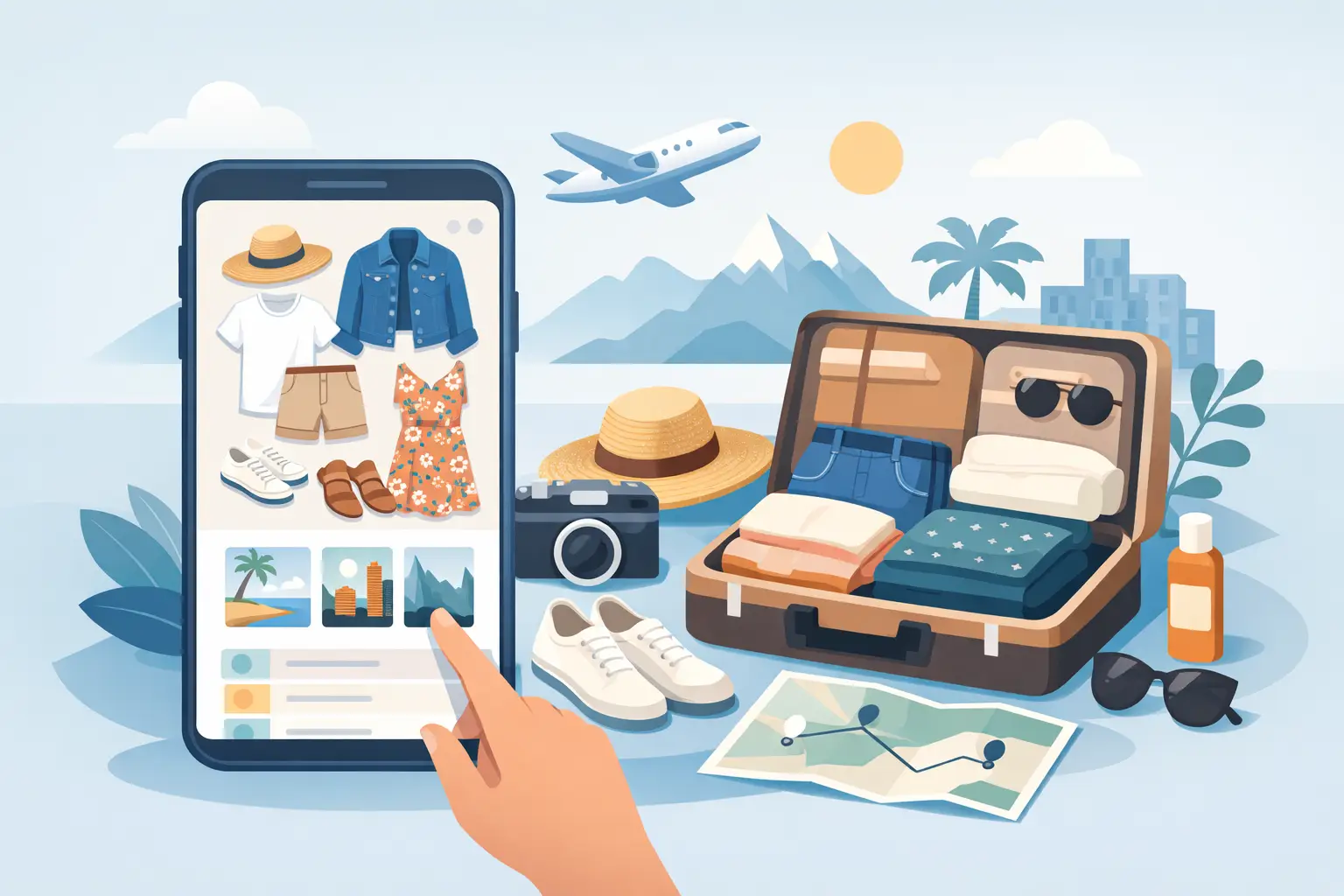
Packing usually falls apart at the same moment - when you realize your "easy" three-day trip somehow needs airport clothes, dinner clothes, workout clothes, a backup layer, and shoes that work with all of it. That is exactly where an app to organize outfits for trips stops being a nice extra and starts saving time, space, and bad packing decisions.
The right app does more than store photos of your clothes. It helps you decide what actually works together before your suitcase is open on the bed. For travelers who shop online, want fewer last-minute outfit changes, and prefer visual certainty over guesswork, that matters. A trip wardrobe is not just about style. It is about reducing friction.
What an app to organize outfits for trips should actually do
A lot of wardrobe apps sound useful until you try to pack with them. Then you find out they are better at cataloging clothes than helping you make decisions. For trip planning, the standard is higher.
A useful app should let you build outfits quickly, compare options visually, and keep everything in one place. If you are planning for a long weekend, a work trip, or a mixed itinerary with daytime walking and evening plans, you need to see your looks together, not scattered across screenshots, shopping carts, and camera roll folders.
This is where visual planning changes the experience. When you can preview combinations on your body or at least save complete looks in a wardrobe view, you stop packing "maybe" pieces. You start packing outfits with a job.
The strongest apps also help before you buy. That detail matters more than people think. Many trip-packing mistakes start during shopping, when you order something that seems useful but does not actually work with what you own. If an app can show realistic try-on results and help you save potential outfits in advance, you make fewer expensive guesses and return less later.
Why travelers need more than a packing list
Packing lists are good for essentials. They are weak for styling. A note that says "2 dresses, 1 jacket, white sneakers" does not tell you whether those pieces form four real outfits or just look reasonable on paper.
That gap is why travelers end up overpacking. They bring extra tops because they are unsure about proportions, extra shoes because they are unsure about versatility, and extra layers because they never checked how the pieces look together. The problem is not forgetfulness. It is lack of visual clarity.
An app to organize outfits for trips solves that by turning vague packing logic into actual outfit planning. You can build around activities, weather shifts, and repeat-wear pieces. A black blazer might cover a flight, a meeting, and dinner. One pair of jeans might work twice if the tops and shoes change. Once you see those combinations mapped out, your suitcase gets smaller without feeling risky.
For frequent travelers, that adds up fast. Fewer unused items. Fewer panic purchases at the destination. Less time changing outfits in a hotel room because something looked better in your head than it does in reality.
The features that matter most
Not every wardrobe tool is built for speed. For trip planning, speed matters because packing decisions usually happen under time pressure. The best experience feels simple: choose pieces, build looks, save them, and review everything in one place.
Visual wardrobe storage is the first requirement. If your clothes are easy to browse, you can spot repetition, gaps, and outfit possibilities quickly. A calendar or trip board can also help, especially if your travel days have different contexts like meetings, sightseeing, dinners, or events.
Realistic try-on is where the category becomes much more useful. Seeing a garment on a model is helpful for shopping. Seeing it on your own body is much better for decision-making. Fit, length, silhouette, and balance all influence whether an item belongs in your suitcase. Advanced AI can cut out a lot of uncertainty here by showing a realistic look in about 10 seconds rather than leaving you to imagine it.
Privacy matters too, especially with photo-based tools. If an app asks for body images, users should expect encrypted processing and automatic deletion after the try-on is complete. Convenience only works when trust is built into the product.
How to use an app to organize outfits for trips without overthinking it
The biggest mistake people make is trying to digitize their entire closet before one trip. That sounds organized, but it creates friction. A better approach is to start with the trip itself.
First, map the trip by use case. Think in terms of moments, not clothing categories: travel day, first dinner, daytime walking, work session, one nicer look, one weather backup. That gives each outfit a purpose.
Next, choose your anchor pieces. These are the items that can repeat without feeling repetitive - usually one outer layer, two pairs of shoes at most, and a few bottoms that can work across multiple tops. Once those are set, build around them.
Then test the weak points. That usually means checking whether the "fun" item actually goes with anything practical, whether the jacket works over the dress, or whether the pants look right with both day and evening shoes. This is where visual outfit planning is far better than mental math.
If you are buying anything for the trip, add it before checkout. A virtual try-on and wardrobe-saving flow can show whether the new piece expands your options or just creates another isolated outfit. That is a small step that can prevent a lot of unnecessary spending.
Where AI makes the biggest difference
AI is not useful just because it is new. It is useful when it removes hesitation. Travel styling has always been full of hesitation - Will this fit right? Does this actually go together? Am I packing too much? Do I need another option?
An AI-powered app can answer those questions faster than the old mix of mirror checks, dressing-room photos, and messy notes. You get realistic previews, quicker outfit comparisons, and styling suggestions based on what is already in your wardrobe. That is a real advantage for online shoppers, where the cost of uncertainty usually shows up as returns.
There is also a practical time benefit. If processing takes around 10 seconds, you are more likely to use the app repeatedly while planning. That sounds minor, but slow tools get abandoned. Fast tools become part of how people shop and pack.
For users who want both planning and purchase confidence, an app like Prova makes the most sense because it combines AI try-on, wardrobe saving, and outfit management in one place. That means you can test how clothes look, organize possible trip outfits, and revisit saved looks later instead of rebuilding decisions from scratch.
The trade-offs to keep in mind
There is no perfect system for every traveler. If you pack very minimally and wear the same basics on repeat, a full outfit-planning app may feel more powerful than you need. A simple note and weather check could be enough.
But if your trips mix different settings, if you shop online often, or if you regularly second-guess what to bring, the value becomes obvious. The more variables you have, the more helpful visual organization gets.
It also depends on how you make decisions. Some people want inspiration and experimentation. Others want certainty. The best trip outfit app should support both. It should be fun to use, but not so playful that it slows down planning. It should help you explore looks, but also help you answer a direct question: what exactly am I packing?
That balance is what separates a novelty tool from something you keep using.
Choosing the best app to organize outfits for trips
If you are comparing options, look for an app that does three things well. It should make outfit planning visual, make shopping decisions more accurate, and make wardrobe management fast enough to use in real life. If any one of those is missing, the experience starts to break down.
Good design matters here more than flashy promises. You want quick uploads, clear saved looks, easy outfit editing, and realistic output. You also want strong privacy language that tells you exactly how your photos are handled. Encrypted processing and automatic deletion are not minor details. They are part of what makes users comfortable enough to actually use the feature.
The best result is simple: you leave for a trip with fewer items, better outfits, and more confidence in every piece you packed. That is what an app should deliver.
A good trip wardrobe does not come from bringing more options. It comes from seeing your options clearly before you zip the suitcase.