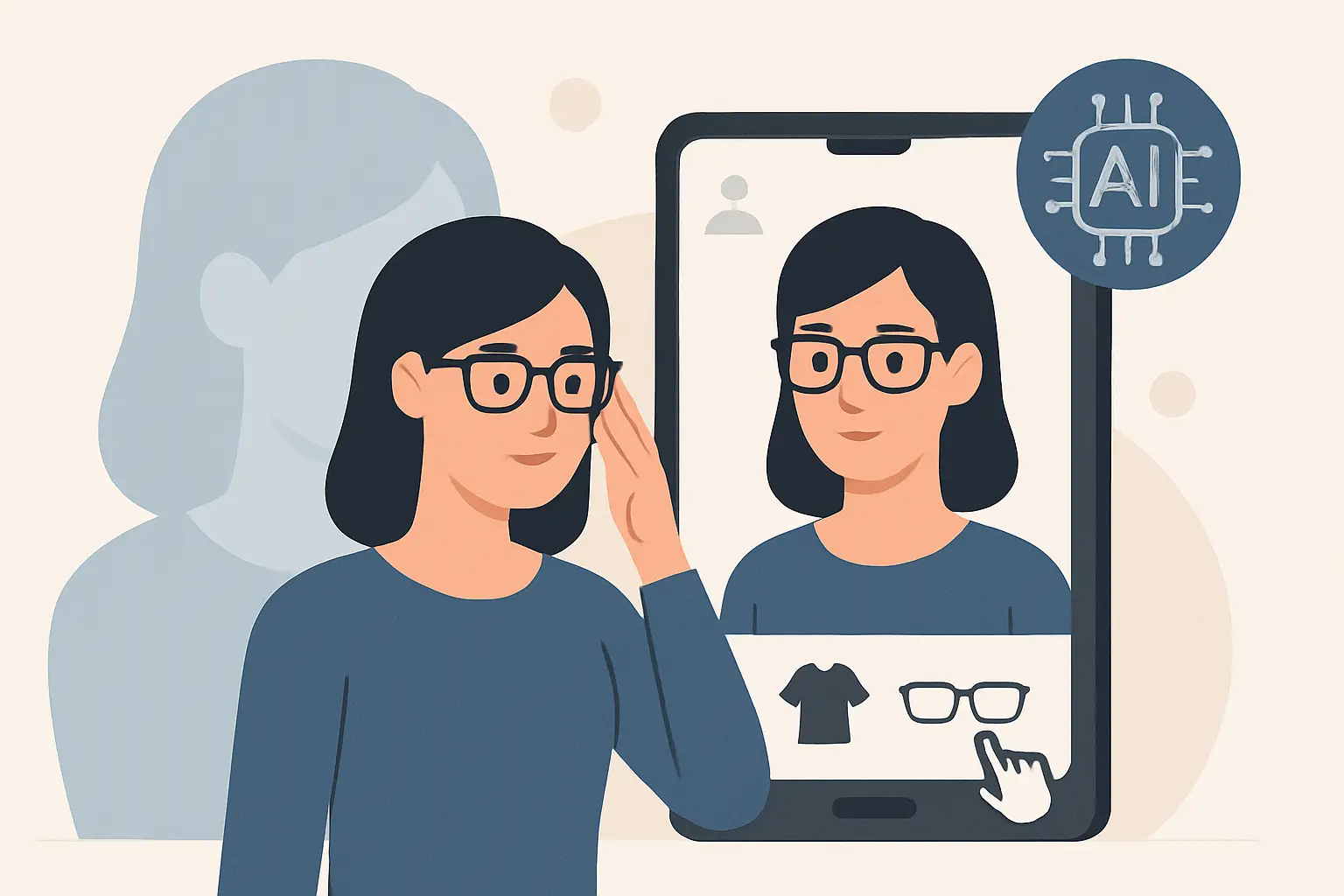
You know the moment: the product photos look perfect, the reviews are mixed, and you are about to gamble on two sizes because returning is easier than guessing. AI virtual try-on promises to kill that guesswork with a single photo and a 10-second preview. The real question is the one shoppers actually care about - will it look right on me.
How accurate is AI virtual try-on?
Accuracy in AI virtual try-on is not one simple score. It is a stack of smaller “did it get this right?” questions: Does the clothing sit on your shoulders correctly? Does the waist land where it should? Do the sleeves look the right length? Is the fabric behaving like fabric, not like a sticker?
In practice, AI virtual try-on is often very accurate for overall appearance and styling decisions - silhouette, color harmony, neckline shape, and how a piece changes the vibe of an outfit. It is less consistent for micro-fit details like tightness across the chest, stretch around the hips, or how a specific fabric drapes when you move.
That trade-off still matters because most returns are not caused by “the shirt was blue instead of green.” They are caused by fit and feel. The best way to think about accuracy is: AI try-on is great at helping you choose what to buy, and improving fast, but it is not yet a guaranteed replacement for fabric-on-skin reality.
What “accurate” actually means for shoppers
If you are using virtual try-on to decide between two sweaters, accuracy means “Which one flatters me more?” If you are using it to decide whether a blazer will close comfortably, accuracy means “Will this feel tight at the shoulders?” Those are different problems.
Most AI try-on systems are optimized for visual realism, not physical measurement. They simulate how a garment looks on your body from a single image, using learned patterns from huge datasets. That makes them strong at styling, proportion, and placement. But it also means they can be weaker at the things your body feels - compression, stretch, weight, and movement.
So when someone asks, “how accurate is ai virtual try on,” the honest answer is: accurate enough to reduce uncertainty and returns for many purchases, especially when you treat it like a confidence tool, not a tape measure.
The three factors that decide your result
1) The photo you upload
Your try-on result is only as clean as your input. A full-body photo with good lighting, a straight-on stance, and minimal background clutter gives the AI more reliable landmarks to work with - shoulders, waist, hips, inseam, and overall body outline.
Photos taken at extreme angles, in dim lighting, or with heavy shadows can warp proportions. Mirrors can introduce distortion too, especially with wide-angle lenses. If you want realism, aim for a natural camera perspective and a clear view of your body.
2) The garment image and how it is represented
Even with perfect AI, a low-quality garment photo creates problems. If the product image is blurry, overly edited, or missing key details like sleeve shape and hemline, the try-on has to guess.
Patterns and textures are another stress test. Small repeating prints, ribbed knits, and lace-like details can look different depending on how the system renders them. Solid colors and clear silhouettes typically look more consistent.
3) The type of item you are trying on
Some categories are naturally easier than others.
A basic tee, hoodie, or straight-leg pant has predictable structure. A corset top, satin slip dress, or heavily pleated skirt has complex drape and tension points. Outerwear adds another layer because it is supposed to sit over what you are wearing, and bulky items can hide the body cues the AI relies on.
If you want a quick rule: the more structured the garment and the more extreme the fabric behavior, the more you should treat the output as directional rather than definitive.
Where AI virtual try-on is impressively accurate
When shoppers say virtual try-on “nailed it,” it is usually in these areas.
First is silhouette and proportion. You can see if a cropped jacket hits at a flattering spot, if a wide-leg pant overwhelms your frame, or if a midi length makes you feel shorter than you expected.
Second is neckline, sleeve, and hem placement. These are high-visibility details that drive whether a piece looks modern, classic, or awkward. AI is getting very good at mapping garments to the right general regions of the body.
Third is styling decisions. This is the underrated win. A try-on preview quickly answers: Does this color work with my skin tone? Does this piece match what I already own? Does the outfit feel like “me” or like a trend I will regret in two weeks?
That kind of accuracy reduces abandoned carts and “panic buying.” It also makes shopping more fun because you can experiment without committing.
Where AI virtual try-on still gets it wrong
If you have ever tried on something virtually and thought, “That looks great, but will it actually fit?” you are zeroing in on the hard parts.
The first is tightness and ease. A try-on might show a dress smoothly skimming your body even if, in reality, the fabric would pull at the bust or cling at the hips. This is because tightness is not purely visual. It is physical, and it depends on fabric stretch, garment construction, and sizing standards.
The second is fabric behavior. Knit vs woven, stiff denim vs drapey rayon, thick wool vs thin polyester - these differences change how clothing hangs and folds. AI can simulate drape, but the results vary, especially when the garment has complex folds or shine.
The third is layering and occlusion. If your photo includes a bulky sweater and you try on a fitted top, the system has to infer what is underneath. Even great models can struggle when the underlying body shape is hidden.
The fourth is motion. Most try-on experiences are based on a single still image. Real life includes walking, sitting, reaching, and the way fabric shifts. Until motion-based try-on is common, there will be a gap between “looks right” and “feels right.”
How to get the most realistic try-on in under a minute
You do not need studio conditions. You just need consistency.
Start with a full-body photo taken straight-on, at about chest height, with your whole body in frame. Stand naturally with your arms slightly away from your sides so the outline of your torso is visible. Good lighting matters more than fancy lighting - face a window or use a bright indoor light to avoid shadows.
Wear fitted clothing in your photo when possible. A close-fitting tee and leggings make your shape easier to read than a baggy hoodie and wide sweatpants. If you prefer not to show shape, that is totally valid, but understand it can reduce precision.
Then sanity-check the garment visuals. If an item’s product photos are heavily filtered or the silhouette is unclear, expect a less reliable preview. When the garment shape is obvious, AI has less guessing to do.
Finally, use the output like a decision tool. Ask: Do I like how it looks on my frame? Does the length feel right for my style? Do I want this in my wardrobe? When the answer is yes, move to size guidance and reviews for the fit details.
A practical way to judge accuracy before you buy
If you want a fast reality check, compare the try-on output to something you already own.
If you are trying on a new blazer, pull up a photo of yourself in a blazer you like. Compare shoulder width, lapel placement, and overall length. If the virtual version looks similar in proportion, you are in a safer zone. If it looks wildly different, pause and investigate sizing, fabric, and cut.
This works because your closet is the best baseline you have. The goal is not perfection. The goal is fewer surprises.
What accuracy means for returns
Virtual try-on can reduce returns in two ways: by preventing style mismatch and by flagging obvious proportion issues early.
If you can see that a dress is shorter than you are comfortable with, you do not buy it. If you can see that a color washes you out, you move on. Those are high-confidence decisions that do not require perfect fabric simulation.
Fit-driven returns are tougher. AI can help you avoid extreme misfires, but it cannot guarantee comfort or sizing consistency across brands. That is why the best shopping flow is: virtual try-on for look and proportion, then size charts and reviews for fit, then a purchase you feel good about.
Privacy and trust are part of “accuracy” now
Accuracy is not only visual. It is also whether you trust the process enough to use it regularly.
When you upload a full-body photo, you are sharing something personal. A serious try-on experience should use encrypted connections and automatically delete photos after processing. That is not a “nice-to-have.” It is how you turn a one-time test into an everyday habit.
If you are looking for a try-on tool built for fast, realistic results with a privacy-first approach, Prova is designed to process try-ons in about 10 seconds, then delete photos automatically after processing - so you can focus on outfits, not worry.
The near future: what will make try-on feel even more real
The biggest leaps in perceived accuracy will come from better handling of fabric physics, sizing context, and personalization.
Fabric is the frontier because it is both visual and physical. Expect improvements in how knits stretch, how satin reflects light, and how heavier materials fold.
Sizing context will also get smarter. Instead of showing a single “idealized” fit, try-on will increasingly reflect what happens when you choose a specific size - how a small pulls at the shoulders, how a large drapes at the waist.
Personalization is the final layer. As systems learn your preferences - how you like jeans to sit, whether you prefer oversized or fitted, what silhouettes you save most - the try-on experience becomes less about generic accuracy and more about accuracy for you.
Shopping should not feel like a bet. Use AI virtual try-on to make faster calls, trust your eye on proportion and style, and let your own comfort standards be the final filter.