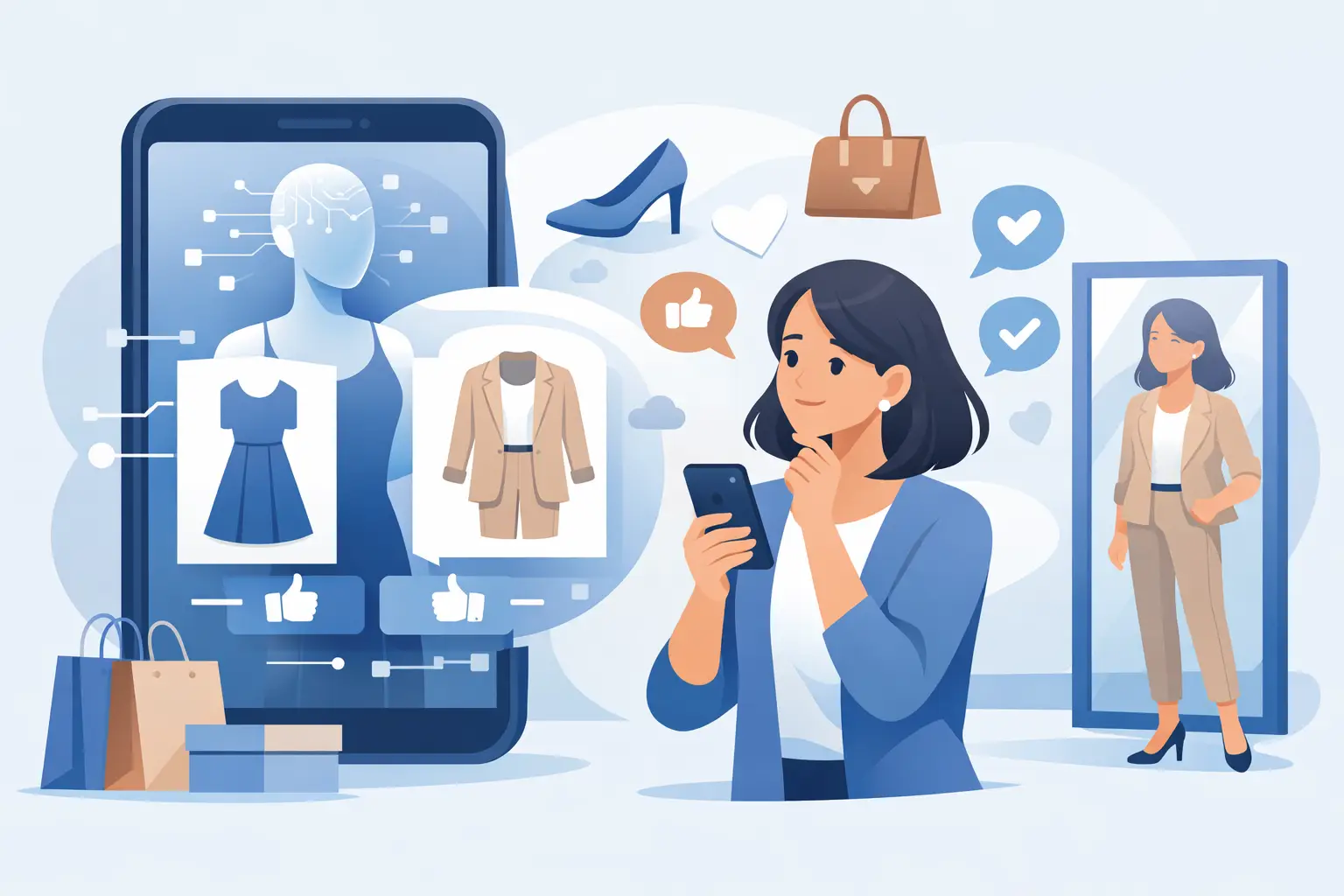
You know the moment. The product page looks perfect, the model styling is convincing, the reviews are mixed, and you're still staring at the size selector like it's a trick question.
That gap between liking an item and actually buying it is where most shopping hesitation lives. It is not just about taste. It is about uncertainty. Will the cut work on your frame? Will the length feel off? Will the color flatter you in real life, not just under studio lighting? An ai fashion app for shopping confidence matters because it closes that gap before you spend money.
For frequent online shoppers, that changes everything. You move faster, second-guess less, and stop treating every purchase like a gamble.
What an ai fashion app for shopping confidence actually does
A good app does more than place a shirt image over a photo. It gives you a realistic preview of how clothing may look on your body, using a full-body image to generate a visual try-on in seconds. That difference matters because confidence does not come from novelty. It comes from clarity.
When the result is fast, you can compare options without friction. When the result is visually believable, you can judge proportion, styling, and overall vibe with more confidence. When the experience is private and simple, you are more likely to use it before every purchase instead of only for special occasions.
That is why the best tools are built like shopping utilities, not just entertainment. They help answer practical questions: Does this silhouette work for me? Is this worth ordering in two sizes? Do I already own something similar? Can I style this with pieces in my closet?
Why shoppers lose confidence in the first place
Most buying hesitation comes from three problems at once.
First, sizing charts are limited. They give measurements, but they do not tell you how a garment will read visually on your shape. Two people can wear the same size and get very different results.
Second, product photos are optimized to sell. That is not a criticism. It is just reality. Lighting, posing, and sample sizing can make almost anything look polished. The issue starts when shoppers expect those photos to predict their own outcome.
Third, returns have become normalized. Many people now order multiple sizes or styles expecting to send most of them back. That feels convenient until it becomes expensive, annoying, and time-consuming.
An AI-based try-on app addresses all three, but only if it is accurate enough to be useful and quick enough to fit into a real shopping habit.
How AI shopping confidence works in real life
The real value shows up in ordinary decisions, not just big wardrobe moments.
Say you are choosing between a cropped jacket and a longer one. Both look great on the retailer's site. On your own preview, one may balance your proportions better immediately. That saves you from buying both just to test them.
Or maybe you found a dress you love, but the neckline feels risky. Seeing it on your own image helps you decide whether it feels like you or whether it is better left in the cart.
This also helps in stores. If you do not want to wait for a fitting room, or if the item is only available in one size on the rack, a virtual try-on can help you make a faster call. Shopping confidence is not tied to e-commerce only. It is about reducing uncertainty anywhere you shop.
What to look for in an AI fashion app
Not every app marketed as AI shopping help is built for actual purchase decisions. Some are fun to play with but too rough around the edges to guide what you buy.
Speed should be at the top of the list. If a preview takes too long, most people will stop using it. Shopping decisions happen quickly. A tool that returns results in about 10 seconds fits that behavior.
Visual realism matters just as much. You are not looking for a cartoon effect. You want a preview that gives a believable sense of fit, drape, and styling. It will never replace trying on every fabric in person, but it should be strong enough to reduce obvious mistakes.
Privacy is non-negotiable. A full-body photo is personal. Shoppers should know how their image is handled, whether data is encrypted, and whether photos are automatically deleted after processing. Confidence is not just about the outfit. It is also about trusting the tool.
Finally, saved outfits add more value than many people expect. Being able to revisit looks, compare options later, and organize what you are considering makes the app more useful over time. It becomes part fitting room, part decision engine, part wardrobe memory.
The trade-offs are real
AI can improve shopping confidence, but it does not make every decision perfect.
Fabric behavior is one limitation. A structured blazer is easier to preview than a highly textured knit or a silky dress with subtle movement. Lighting and photo quality also affect results. A clear, full-body image usually produces a stronger try-on than a dim mirror selfie.
There is also a difference between visual confidence and physical comfort. An app can help you see whether something looks right, but it cannot fully tell you whether a waistband feels tight after three hours or whether a fabric is itchy. That is why the best expectation is not perfect certainty. It is better certainty.
That still matters a lot. If a tool helps you avoid even a few bad purchases, it saves time, return effort, and decision fatigue.
Why this matters for returns and smarter buying
Returns are often treated like a harmless backup plan. They are not always harmless for the shopper.
They interrupt your week. They clutter your space. They delay refunds. They also encourage indecision, because it feels easier to order now and figure it out later. Over time, that creates a sloppy shopping habit.
An ai fashion app for shopping confidence can tighten that habit. Instead of impulse-ordering three versions of the same item, you narrow your choices first. Instead of guessing whether a trend works for you, you pressure-test it visually. Instead of forgetting what you already own, you build a clearer picture of your wardrobe and buy with more intention.
That is where the technology becomes more than a novelty feature. It changes how people shop. Less trial and error. More visual confirmation before checkout.
The best use case is not perfection. It is momentum.
Many shoppers think confidence means being 100 percent sure before buying. That is not realistic. Style is personal. Fit varies by brand. Taste changes.
A better goal is momentum with fewer mistakes. If an app helps you go from uncertain to reasonably sure, that is a strong outcome. You stop stalling on purchases you actually want. You stop making random bets on items you never wear. You get a faster path from browsing to a decision.
That is especially useful for people who shop often, shop on mobile, or do not have time for traditional try-ons. College students, busy professionals, and anyone who buys between meetings, commutes, or late-night scrolling need tools that are quick and clear. They are not looking for a fashion lecture. They want an answer.
Where a product like Prova fits
This is exactly why apps like Prova are gaining traction. The value is straightforward: upload a full-body photo, see realistic try-ons in about 10 seconds, save outfits, and make decisions with more confidence. The privacy side matters too - encrypted connections and automatic photo deletion remove a major barrier for users who want speed without giving up control.
That combination of fast results, visual accuracy, and built-in outfit management is what turns AI from a gimmick into a shopping habit. It is practical. It is reassuring. And it fits how people actually buy clothes now.
Shopping confidence is becoming a product feature
A few years ago, confidence mostly came from reviews, return policies, and brand familiarity. Those still matter. But they are indirect signals. They do not show you the item on you.
Now shoppers expect more direct proof. They want to preview, compare, save, and decide before they click buy. That expectation will only grow as AI tools get faster and more realistic.
The winners will be the apps that stay simple. Not overloaded. Not overly technical. Just clear enough to help people answer the question behind every cart decision: can I actually see myself wearing this?
When the answer comes quickly, visually, and securely, shopping stops feeling like a guess. It starts feeling informed. And that kind of confidence tends to carry beyond one purchase - into a closet full of better decisions.