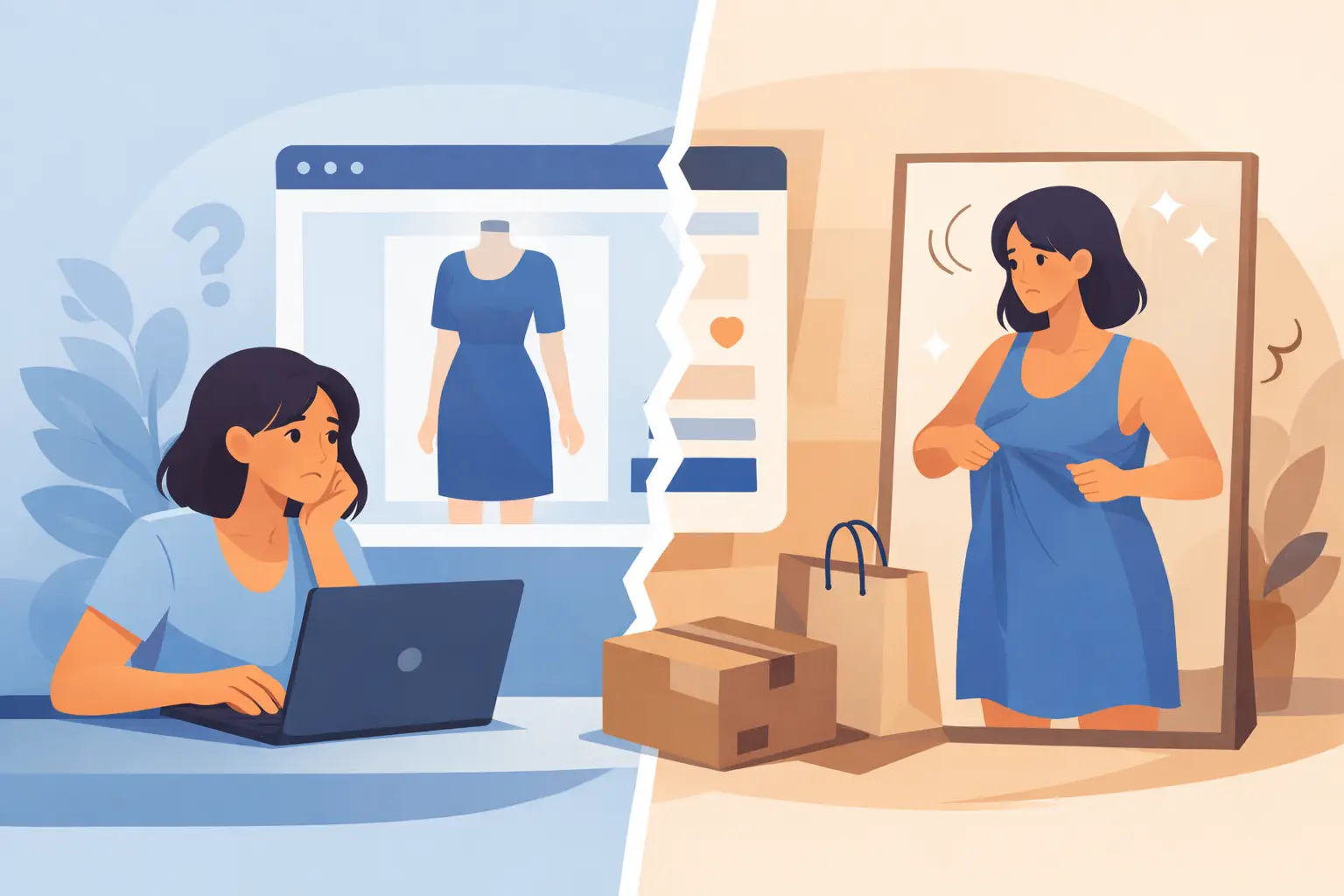
You open the package, hold up the dress, and immediately know it is not the same item your brain said yes to two nights ago. The color feels off. The fabric looks flatter. The fit is doing something completely different than it did on the model.
That moment is common for a reason. Online shopping compresses a real, physical experience into a few photos, a size chart, and some marketing copy. If you are wondering what to do when clothes look different online, the answer is not just return them and move on. The better move is to build a faster filter before you buy, so you catch the mismatch earlier and waste less time.
What to do when clothes look different online
Start by separating two different problems: the item may be inaccurately presented, or it may simply look different on your body than it looked on theirs. Those are not the same issue, and treating them like they are leads to bad buying decisions.
If the color, cut, or details are clearly different from the product listing, that is a retail accuracy problem. If the garment is technically the same but falls differently, clings in different places, or throws off your proportions, that is a styling and fit problem. Most disappointing purchases are actually the second one.
That is why the smartest shoppers do not rely on product photos alone. They cross-check how an item is shown, how it is described, and how it is likely to translate onto their own shape, height, and wardrobe.
Why clothes look different online in the first place
Retail photography is built to sell. That does not automatically mean it is misleading, but it does mean every image is controlled.
Lighting can shift color warmer or cooler. Studio pins can change the shape of a garment on a model. Posing can hide bunching, stiffness, or extra volume. Even fabric movement can be selective - a floaty shot makes polyester look softer than it is, while a close crop can hide sheerness.
Then there is the body factor. A midi skirt on a 5'10" model can become ankle length on someone who is 5'3". A boxy blazer can read polished on one frame and oversized on another. A fitted knit can look sleek in a still image and feel restrictive in real life.
None of this means you should stop shopping online. It means you need a better system than zooming in and hoping for the best.
Read the product page like a skeptic, not a fan
The first trap is shopping the vibe instead of the garment. If the styling is excellent, it is easy to mentally buy the whole look instead of evaluating the actual item.
Slow down and inspect what is fixed versus what is flexible. Fixed details include sleeve length, seam placement, neckline depth, closure type, and fabric composition. Flexible details include how it is styled, what it is layered with, and how much the model photo depends on heels, tailoring, or camera angles.
Fabric composition matters more than most people think. If something looks thick and structured in photos but the materials are mostly rayon or thin polyester, expect less structure. If a white shirt is described with words like lightweight or airy, assume some transparency unless reviews or photos prove otherwise.
Product descriptions can also quietly reveal risk. Phrases like relaxed fit, oversized, body-skimming, or cropped all mean different things depending on the brand. If the listing is vague, that is not a small issue. Vague copy usually means you need more proof before buying.
Use photos to spot red flags before checkout
When figuring out what to do when clothes look different online, product images should be treated like evidence, not decoration.
Look for consistency across photos. If the color changes drastically between the first image and later shots, do not assume your screen is the only reason. If one angle makes the fabric look smooth and another makes it look shiny or thin, trust the inconsistency. It usually shows up in person too.
Pay attention to how many types of photos a retailer provides. Front-only shots are less useful than front, side, back, close-up, and movement images. A missing back view is often a problem. So is a lack of texture close-ups for knits, satin, linen blends, and anything with stretch.
Model stats help, but only when they are specific. Height alone is not enough. If you know your proportions differ from the model's, mentally adjust hem length, rise, sleeve position, and overall balance.
Reviews help, but not in the way most people use them
Most shoppers jump straight to star ratings. That is too broad to be useful.
Instead, scan for patterns in fit language. If multiple reviewers say the top pulls at the chest, runs short in the torso, or looks cheaper than expected in natural light, that is actionable. If reviews repeatedly mention that the color is greener, brighter, or duller than shown, believe them.
Customer photos are often more valuable than polished brand images because they remove some of the production control. They show what the item looks like in bedrooms, office lighting, mirror selfies, and normal posture. That is much closer to the experience you will actually have.
There is a trade-off, though. Customer photos vary in quality, and not every reviewer styles the item well. A great piece can look underwhelming in a rushed photo. That is why reviews should confirm or challenge the listing, not fully replace it.
Size charts are necessary, but they are not enough
A size chart tells you whether you can get into the garment. It does not tell you whether the garment will look the way you expect.
This is where many returns start. Shoppers order the technically correct size and still feel disappointed because the silhouette is wrong. The jeans fit the waist but throw off the leg line. The sweater fits the bust but drops too long and loses shape. The jacket closes, but the shoulder line changes the whole look.
So use the chart, but pair it with visual prediction. Ask yourself how this piece will land on your body, not just whether your measurements match the label.
See it on your body before you buy
If you want fewer surprises, the fastest fix is simple: stop trying to imagine the garment on yourself from a model photo alone.
A virtual try-on tool closes that gap because it shifts the decision from abstract to visual. Instead of guessing how the neckline, hem, or shape might translate, you can preview the item on your own body and catch problems before checkout. That includes pieces that are technically attractive but wrong for your proportions, personal style, or existing wardrobe.
For frequent online shoppers, this is where the biggest time savings happen. You stop buying based on hope and start buying based on evidence. Prova, for example, lets you upload a full-body photo and see clothing digitally overlaid in about 10 seconds, which makes it much easier to judge styling, balance, and overall look before you commit. That matters if your goal is not just fewer returns, but faster decisions with more confidence.
What to do when clothes look different online after delivery
Sometimes you still miss. When that happens, do a quick diagnosis before you rip off tags or start a return.
First, compare the item to the listing. Is the issue objective, like a different color tone, missing detail, or noticeably altered cut? Or is the issue subjective, like the piece being less flattering than expected? That distinction matters because it changes your next step.
If the item appears materially different from the listing, document it right away with clear photos in natural light. That gives you a stronger case for return support. If the item is accurate but just not working on you, test one styling change before giving up. Sometimes a heel swap, different bra, tuck, or layer fixes the problem. Sometimes it does not. The point is to separate a true mismatch from a styling miss.
Do not keep mediocre pieces out of guilt. If you already know you will not wear it, return it while the window is open.
Build a lower-return shopping routine
The best answer to online shopping disappointment is not perfection. It is reducing avoidable misses.
That means buying with a repeatable process. Check the fabric. Scan for image inconsistencies. Read fit-specific reviews. Compare the model to your proportions. Preview the item on your own body when possible. Save outfits you are considering so you can revisit them with fresh eyes instead of impulse-buying in the moment.
This kind of shopping is faster than it sounds because it cuts out the slowest part of all - ordering, waiting, trying on, repacking, and returning. A little more certainty upfront saves a lot of friction later.
Online shopping will never be identical to trying things on in a fitting room. But it can get a lot closer when you stop buying the photo and start checking the reality behind it.