You know the moment: you find the jacket, you pick your size, you hit Buy - and then you spend the next three days wondering if you just ordered a return label.
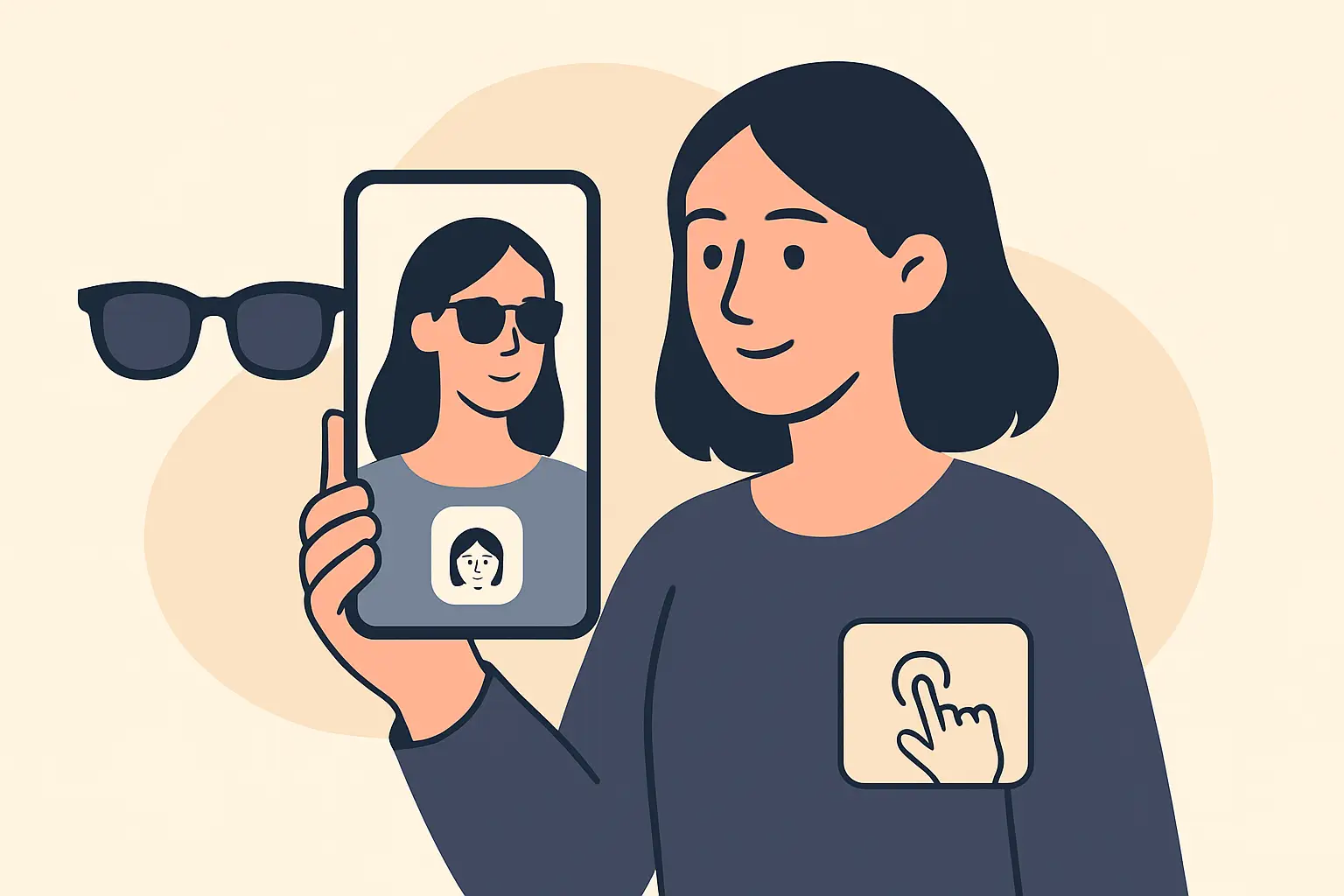
A virtual try on app is built for that exact anxiety. It takes the guesswork you normally do in your head (will this hang right on my shoulders, will the waist sit high or low, does the color wash me out) and turns it into something you can actually see on your own body.
But not all try-on experiences are equal. Some are basically stickers. Some look decent until you move your phone. Some are quick but not believable. If you shop online a lot, the difference matters.
What a virtual try on app is really solving
Online shopping fails in three predictable places: fit, proportion, and styling.
Fit is the obvious one. Sizing charts are averages, and averages are not your body. Even when the measurements are accurate, brands interpret them differently. A “medium” can mean five different silhouettes depending on the cut.
Proportion is sneakier. A top can technically “fit” but still look off if the hem hits at an awkward point on your torso or the sleeves visually shorten your arms. This is why two people in the same size can have totally different outcomes.
Styling is the final friction point. You are rarely buying a shirt in isolation. You are buying what that shirt does to your whole look - with your jeans, your sneakers, your jacket, your vibe.
A good virtual try on app tackles all three by showing a realistic overlay on your photo. Not a mannequin. Not a model. You.
How it works (and why speed changes everything)
Most modern try-on apps follow the same basic workflow: you provide an image of yourself, you provide a garment image, and AI generates a version of the garment positioned on your body.
Where things get real is in the details.
First, the app has to understand your body in the photo: your pose, your proportions, where your shoulders actually are, where your waistline lands, and how fabric should drape given the shape it is placed on.
Second, it has to interpret the clothing image: what is the garment category, how does it hang, what parts should remain rigid (like a collar), and what parts should flow (like a skirt).
Third, it needs to merge the two without producing the common “AI tells” that kill trust. If the pattern warps weirdly, if the sleeves melt into the background, or if the edges look pasted on, your brain instantly labels it as fake - and you are right back to guessing.
Speed matters because try-on is a decision loop. If it takes a minute per outfit, you stop experimenting. If it takes about 10 seconds, you try three sizes, two colors, and a second style just to compare. That is how you get to clarity fast instead of letting your cart sit for a week.
What “accuracy” actually means in virtual try-on
People ask for “stunning accuracy,” but accuracy is not one thing.
There is visual realism: does it look like a photo you could have taken? Clean edges, correct scale, believable shadows, and fabric that looks like fabric.
There is garment integrity: stripes stay stripes, logos do not distort, buttons stay where buttons should be. This is especially important for fitted tops, tailoring, and anything with strong structure.
And there is body alignment: the neckline should land where it should, sleeves should start at the shoulder point, and waist shaping should appear in the right area.
Even with excellent AI, there are trade-offs. If the clothing photo is low resolution, if it is shot at an angle, or if it is wrinkled on a bed, the app has less clean information to work with. The best output usually comes from clear product images with the full garment visible.
Also, try-on is not the same as guaranteed fit. A visual overlay can show you proportion and vibe extremely well, but comfort and stretch depend on fabric and construction. The app should reduce uncertainty, not pretend it can rewrite physics.
The features that separate a “fun demo” from a daily tool
A virtual try on app becomes useful when it fits into how you actually shop - fast, messy, and across multiple places.
Full-body try-on, not just face filters
Face filters are entertaining. They are not what you need when you are buying pants, coats, or dresses. Full-body matters because most fit mistakes happen below the neckline: rise, length, hip placement, and overall silhouette.
Cloud processing that does not make you wait
If you are shopping on a break between meetings or while you are walking to class, you are not going to babysit an export bar. Near-instant processing is not a luxury. It is the difference between “I used it once” and “I use it every week.”
My Wardrobe and outfit memory
Shopping is rarely one decision. You compare. You revisit. You change your mind.
A built-in “My Wardrobe” style feature matters because it turns try-on into an organized system. You can save looks, come back later, and actually see what you were thinking when you added something to your cart. It also makes it easier to build outfits instead of buying random pieces.
Style tips that do not feel generic
The best recommendations feel like a smart friend who understands the goal. They point out what works with your proportions, offer alternatives when something is close-but-not-right, and help you commit faster.
The wrong recommendations feel like spam. If every outfit tip is the same, you stop trusting the app.
Privacy you do not have to guess about
Try-on requires personal photos. That is non-negotiable. So security has to be explicit.
Look for clear statements like encrypted connections and automatic photo deletion after processing. If the app is vague about retention, or if you cannot tell what happens to your images, treat that as a real cost - because it is.
How to get better results from any virtual try on app
You do not need perfect lighting or a studio shot, but you do need a usable photo.
A full-body photo with your whole outfit area visible works best. Avoid extreme angles and heavy shadows that hide your outline. A simple background helps the AI separate you from the environment.
For clothing, use the cleanest image you can find. If you are pulling from a product page, choose a straight-on view where the garment is not folded or blocked. Patterns and details render better when the source image is sharp.
If you are comparing sizes, try the same garment image and swap sizes in the same session. The point is side-by-side decision-making, not generating one pretty picture.
When a virtual try-on app is the smartest choice
It is most valuable when the downside of being wrong is high.
If you are buying a statement piece, anything tailored, or anything you need for a specific event, uncertainty is expensive. It costs time, shipping, and mental bandwidth.
It is also a strong move when you are experimenting with a new style. If you have never worn wide-leg pants or a cropped jacket, seeing it on your body is the fastest way to decide if it is “you” without turning your bedroom into a fitting room.
And if you are a frequent online shopper, it becomes a habit. Less second-guessing, fewer returns, cleaner closets.
What to watch out for (so you do not get fooled)
If an app only works in perfect conditions, it will disappoint you in real life.
Be cautious of try-on tools that look great on a single sample image but fall apart with different poses or body types. Also watch for apps that over-smooth everything. If the output always looks airbrushed, it may be hiding alignment problems.
Finally, pay attention to whether the app makes it easy to compare and save. The ability to revisit outfits is what turns “cool tech” into actual purchase confidence.
A practical way to choose your next virtual try on app
If you are deciding what to use, focus on outcomes.
You want realistic full-body results, fast processing (think seconds, not minutes), and a clear privacy stance with encryption and automatic deletion. You also want a place to keep your looks so you can make decisions when you are ready, not only in the moment.
If that is the experience you are after, Prova is a consumer-first option built around speed, realistic try-on, and outfit management - you can check it out at https://prova.studio.
The best part about this category is that it is finally becoming practical. Not a gimmick. Not a one-time novelty. A tool you can use while you shop, while you plan outfits, and while you decide what deserves a spot in your closet.
Buy fewer maybes. Try more ideas. And keep the version of shopping where you are confident before you check out.