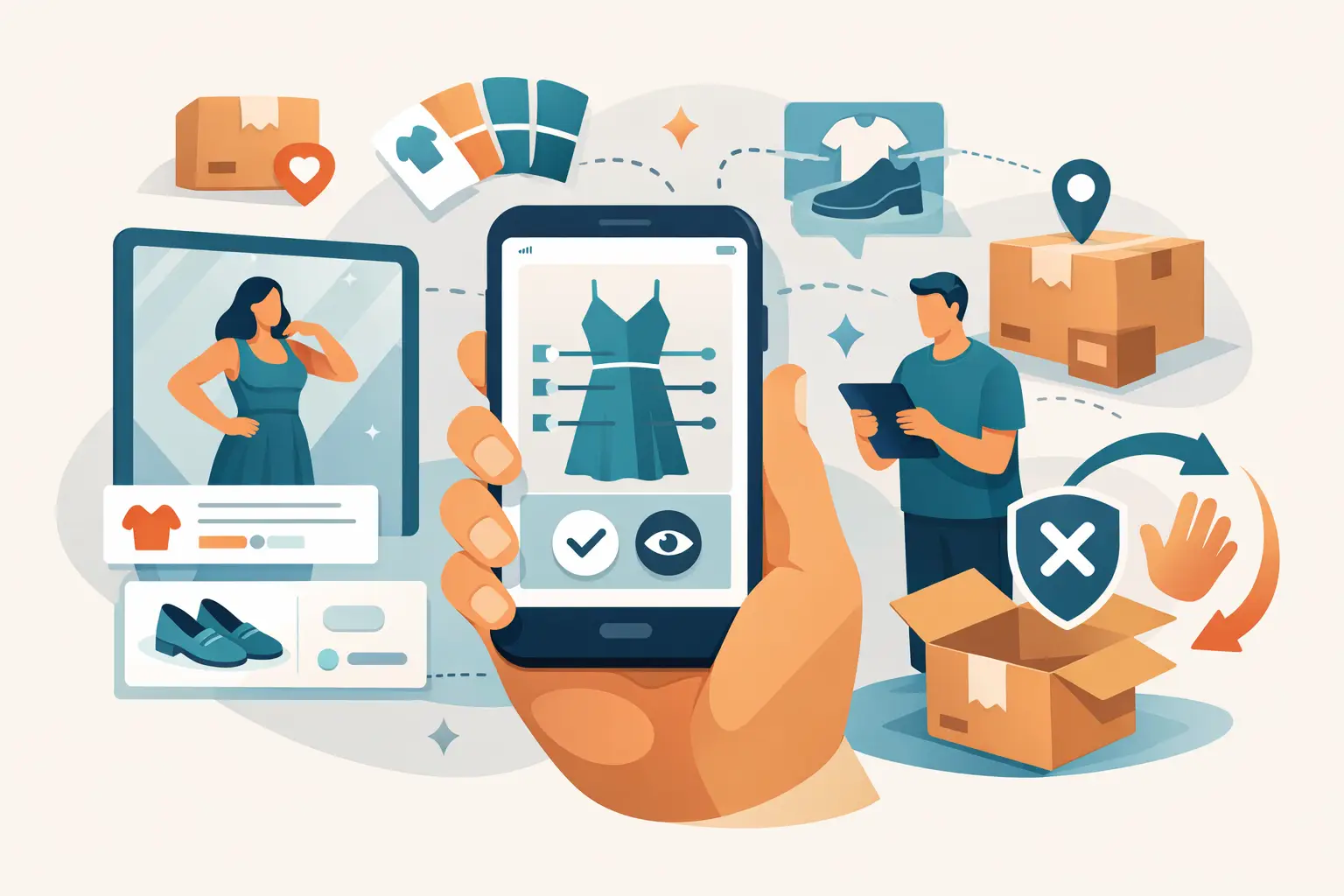
You know the feeling. A package lands, the color is slightly off, the fit is nowhere close, and now your "great deal" comes with a return label, tape, and a trip out the door. That is exactly why more shoppers are looking for apps that help avoid returns before they check out.
The good news is that this category has gotten smarter fast. The best apps do not just make shopping easier. They reduce the reasons people send clothes back in the first place - wrong fit, bad proportions, styling regret, duplicate pieces, or buying something that never worked with the rest of your closet.
If you shop online often, the right app can save real time and money. But not every app solves the same problem. Some focus on sizing. Some focus on visual try-on. Some help you decide whether an item fits your style and wardrobe. The best choice depends on what usually causes your returns.
What apps that help avoid returns actually do
Most apparel returns happen because shoppers are forced to make a decision with incomplete information. Product photos show one body type. Size charts are inconsistent. Reviews are helpful until you realize the reviewer is built nothing like you. That gap between product page and real-life outcome is where returns start.
Apps that help avoid returns close that gap in a few different ways. They may estimate fit using your body data, show how a garment looks on your frame, compare measurements across brands, or help you build outfits before you buy. Some even track what is already in your closet, which matters more than people think. A lot of returns are not sizing mistakes. They are hesitation purchases that looked exciting alone and pointless once they arrived.
That means the smartest app is not always the one with the most features. It is the one that removes your biggest source of uncertainty.
7 apps that help avoid returns
1. Virtual try-on apps
If your main issue is visual uncertainty, virtual try-on is the strongest fix. This is the category built for the moment when you think, "I like this on the model, but what will it look like on me?"
A strong virtual try-on app lets you upload a full-body photo and see clothing placed on your own shape with realistic proportions. That changes the decision completely. You are no longer guessing from flat product shots. You are seeing length, silhouette, and overall styling before you spend.
This is especially useful for dresses, outerwear, statement pieces, and trend-driven items where the question is not just "Will it fit?" but "Will it actually suit me?" That distinction matters because many returns are driven by appearance regret, not technical sizing failure.
Prova fits here. It uses advanced AI technology to generate a realistic try-on in about 10 seconds, which makes it practical enough for everyday shopping, not just occasional testing. The speed matters. If the process is slow, shoppers skip it. If it is fast, they use it before buying. Privacy matters too, and this category needs to earn trust. Encrypted processing and automatic photo deletion remove a major barrier for users who want accuracy without feeling exposed.
2. Size recommendation apps
Some shoppers do not need to see the outfit. They just need to know whether to buy a small, medium, or large. Size recommendation apps focus on that problem by using your height, weight, body shape, and past purchases to predict the best size.
These tools are helpful when you already know you like the product and just want to avoid the wrong size. They tend to work best for basics, denim, activewear, and brands with enough data consistency to support accurate recommendations.
The trade-off is simple. Size apps may reduce fit returns, but they do not solve style uncertainty. They can tell you what might fit. They usually cannot show whether the cut flatters you or whether the proportions feel right. For some shoppers, that is enough. For others, it still leaves too much guesswork.
3. Body measurement apps
Measurement apps take a more technical route. Instead of relying only on broad profile inputs, they help estimate or record detailed body measurements that you can compare with product specs.
This can be effective if you shop across many brands or buy categories with less forgiveness, like trousers, fitted blazers, or occasionwear. More measurement clarity usually means fewer mistakes.
Still, this approach asks more from the shopper. You may need to measure manually, stand correctly for scanning, or understand garment dimensions well enough to compare them. If you enjoy precision, great. If you want a faster, more intuitive answer, this can feel like work.
4. Digital wardrobe apps
A surprising number of returns happen after the package arrives and reality sets in. The item fits fine, but it does not go with anything. It duplicates what you own. It solves no real need.
That is where digital wardrobe apps earn their place. They let you catalog your clothes, review saved looks, and check whether a new purchase actually earns space in your closet. This is less about fit and more about purchase discipline.
For frequent shoppers, this can be one of the most useful return-prevention tools available. When you can see your existing wardrobe in one place, impulse buys get exposed quickly. You spot overlap, weak outfit potential, and pieces that looked fun in isolation but add nothing in practice.
If an app combines wardrobe management with try-on, it becomes even more useful. You are not just previewing one garment. You are evaluating whether it works with the clothes you already wear.
5. Outfit planning and styling apps
Sometimes the problem is not sizing or wardrobe duplication. It is decision quality. You buy a piece because it seems promising, then return it because you cannot style it.
Outfit planning apps reduce that problem by helping you create looks in advance. Some suggest combinations. Others recommend colors, layering options, or accessories based on the item you are considering.
This matters for shoppers who like to experiment but hate wasting money on one-note pieces. If an app helps you see three or four strong outfit directions before purchase, confidence goes up and return risk drops.
The limitation is that styling advice is only as good as the visual context behind it. Generic recommendations can help, but they are less convincing than seeing the item on your own body or with your own wardrobe.
6. Review aggregation and fit feedback apps
Some apps collect user reviews, fit notes, and sizing feedback from real shoppers across stores or products. They help answer questions like whether an item runs short, stretches out, or works better for athletic builds than straight ones.
This kind of social proof can be valuable, especially for unfamiliar brands. A product page may say "true to size," but large-scale shopper feedback often tells a more useful story.
The catch is inconsistency. Reviews are subjective, body types vary, and many people describe fit in ways that are hard to translate. These apps are best used as a filter, not as your only source of truth.
7. Resale and closet value apps
This one is indirect, but it matters. Apps that help you track closet value, resale potential, or purchase history can make you much more selective. When you start thinking in terms of cost per wear and future value, random purchases lose their appeal.
That mindset shift leads to fewer bad buys and, by extension, fewer returns. It will not solve sizing mistakes on its own, but it can stop the kind of over-ordering that creates them.
How to choose the right app for your shopping habits
If you mostly return items because they look different on you than they did online, start with virtual try-on. If your issue is inconsistent sizing across brands, size recommendation or measurement tools will likely help more. If you buy too many pieces that do not integrate with your closet, look at digital wardrobe and outfit planning features first.
The strongest setup is often a combination. Visual try-on handles confidence. Sizing tools handle technical fit. Wardrobe tools handle purchase discipline. Together, they cover the three biggest reasons apparel gets sent back.
You should also pay attention to speed and trust. An app can have impressive features, but if it takes too long or feels careless with personal images, most people will not use it consistently. The apps that help avoid returns in real life are the ones that fit naturally into the shopping moment - fast enough to use before checkout, clear enough to trust, and useful enough to repeat.
What matters more than app features
The app matters, but your behavior matters too. If you still order three sizes with the intention of sorting it out later, no tool will fully solve the problem. The point is to make one better decision before purchase, not to create a more elaborate version of guess-and-return.
That is why the best apps feel less like shopping extras and more like decision tools. They reduce uncertainty at the exact moment it shows up. You are looking at an item, wondering if it is worth it, and the app gives you a clearer answer fast.
That is the real standard to use. Not whether an app sounds advanced, but whether it helps you buy with enough confidence that the return never starts.