You know the moment: the package shows up, you try it on, and it is instantly clear it is going back. The shoulders sit wrong. The waist is weird. The color looks different on you than it did on the model. Returns are not just annoying - they are time, money, and momentum.
A good try clothes virtually app is built for that exact moment, just earlier in the process. Before you buy. Before you commit to three sizes “just in case.” Before your weekend plans turn into printing labels.
What a try clothes virtually app is really solving
Most people think the problem is sizing. That is part of it, but it is not the whole story.
What shoppers actually want is visual certainty. Not a size chart. Not “runs small” comments from strangers with unknown proportions. You want to see how a piece sits on your body, with your shape, your posture, and your vibe.
That is where virtual try-on works best: it replaces guesswork with a realistic preview. The best apps do it fast enough that you keep shopping instead of treating it like a chore.
How virtual try-on works (in plain English)
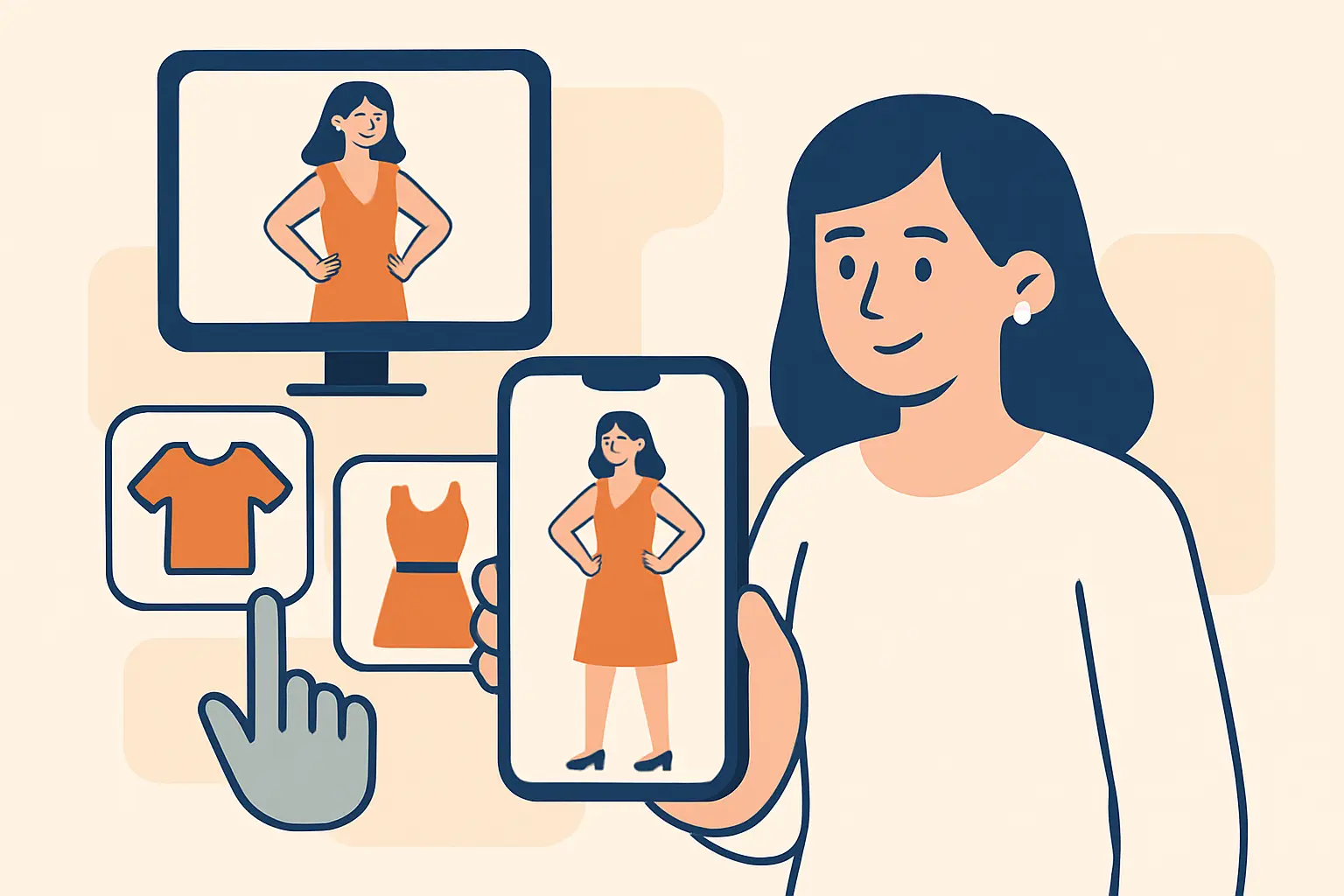
At a high level, virtual try-on uses AI to map clothing onto a human figure. The strongest experiences are photo-based: you upload a full-body photo, pick a garment image, and the app generates a result that looks like you actually put it on.
There are trade-offs depending on the approach. Some experiences are “AR mirror” style, where you move your camera around and see an overlay. That can feel fun, but it can also look floaty or misaligned, especially with fabric that should drape.
Photo-based try-on is usually more convincing for fit and styling because it can focus on detail: where the hem lands, how the sleeves fall, how the silhouette changes your proportions. It also gives you an image you can save, compare, and share.
What “accuracy” means, and what it does not
Virtual try-on can be stunningly realistic, but you should judge it by the right criteria.
Accuracy is not just whether a shirt appears on your body. It is whether the app preserves the garment’s structure and your body’s structure at the same time. Look for results where:
- The neckline and shoulders land where they should, not drifting up or down.
- The waist and hips keep natural curves instead of flattening.
- The fabric looks like it has weight and direction, not like a sticker.
Even the best try-on is not a guarantee of perfect real-world fit. Stretch, fabric thickness, and brand patterning still matter. Think of it as a confidence tool: it helps you avoid obvious misses and make better first picks.
If you shop online a lot, that shift is huge. Fewer “maybe” purchases. Fewer return piles. More outfits you actually wear.
The features that matter when you are shopping fast
There are plenty of apps that can generate a cool image. That is not the same as helping you make a decision.
Speed you can feel
If a try-on takes minutes, you will stop using it. The sweet spot is quick enough that it becomes part of your normal browsing. When results land in about 10 seconds, you can test multiple items, compare silhouettes, and move on with confidence.
Full-body support (not just tops)
Real shopping decisions happen in context. A jacket might look great, but not with the jeans you live in. A skirt might work, but only if the waistline is right on you.
Full-body try-on lets you judge proportion and balance - the things that determine whether something feels “off” when you put it on.
Outfit management
If you cannot save and revisit looks, you are stuck screenshotting everything and losing track. A built-in wardrobe or saved-outfits area turns try-on into something you come back to, not a one-time novelty.
This matters most when you are comparing options across brands, building a vacation capsule, or shopping for an event where you want multiple backup plans.
Style guidance that does not feel random
AI style tips are only helpful when they are specific to the outfit you just tried on. The best recommendations do not push trends. They help you answer practical questions: Does this need a different shoe? Would a shorter jacket balance the proportions? Is this color washing you out?
When style guidance is grounded in what you are actually wearing, it becomes a shortcut to looking put-together.
Privacy: the non-negotiable requirement
Virtual try-on is personal by definition. You are uploading a full-body photo, and that means privacy is not a footnote.
A try clothes virtually app should be clear and direct about security. Look for encrypted connections during upload and processing, and automatic photo deletion after the result is created. If the app is vague here, treat it as a red flag.
You should not have to trade peace of mind for convenience.
How to use a try clothes virtually app to buy smarter
The fastest path to value is to use try-on as a decision filter, not entertainment.
Start with items where visuals drive regret: fitted dresses, tailored pants, jackets, anything with a strong shoulder line, and pieces in bold colors. Try-on helps you spot proportion issues early, before you buy.
Then use it for comparison. Try two similar silhouettes and see which one flatters you more. Try the same item in two colors and pick the one that looks best on your skin tone. This is where virtual try-on earns its keep - it turns endless tabs into a clear winner.
Finally, use saved looks to reduce repeat mistakes. When you find proportions that work, keep them. Your future self will thank you.
Where try-on helps most (and where it depends)
Virtual try-on is a clear win for style confidence. Fit confidence is strong too, with a few caveats.
It is best for understanding how something will look on your body: length, shape, balance, and overall vibe. It is also great for avoiding the classic online shopping trap where an item looks perfect on a model but totally different on you.
It depends more when fabric behavior is the whole story. Ultra-stretch leggings, heavy knits, and very textured materials can behave differently in real life than in an image. In those cases, use try-on to decide if you like the look, then rely on fabric details and sizing guidance to finalize the purchase.
What to look for when choosing the right app
You do not need ten features. You need the right few, done well.
Prioritize realistic output, fast processing, and privacy you can verify. Then choose an app that makes it easy to organize your looks, because the real payoff comes from repeat use.
If you are looking for a consumer-grade option built around speed, realistic results, encrypted processing, automatic photo deletion, and a “My Wardrobe” approach to saving outfits, Prova is designed for exactly that workflow.
The shopping future is visual, not speculative
Online shopping is not slowing down, and neither is the return problem. Virtual try-on is the most direct fix because it addresses the real issue: people buy uncertainly when they cannot see themselves in the product.
The apps that win will be the ones that respect your time and your privacy while delivering results that feel believable. When you can test an outfit in seconds, save your best looks, and share them for feedback, shopping gets lighter. Less second-guessing. Fewer boxes by the door.
Next time you are about to buy something you are not sure about, do one thing first: try it on virtually. Your closet will get smarter fast.