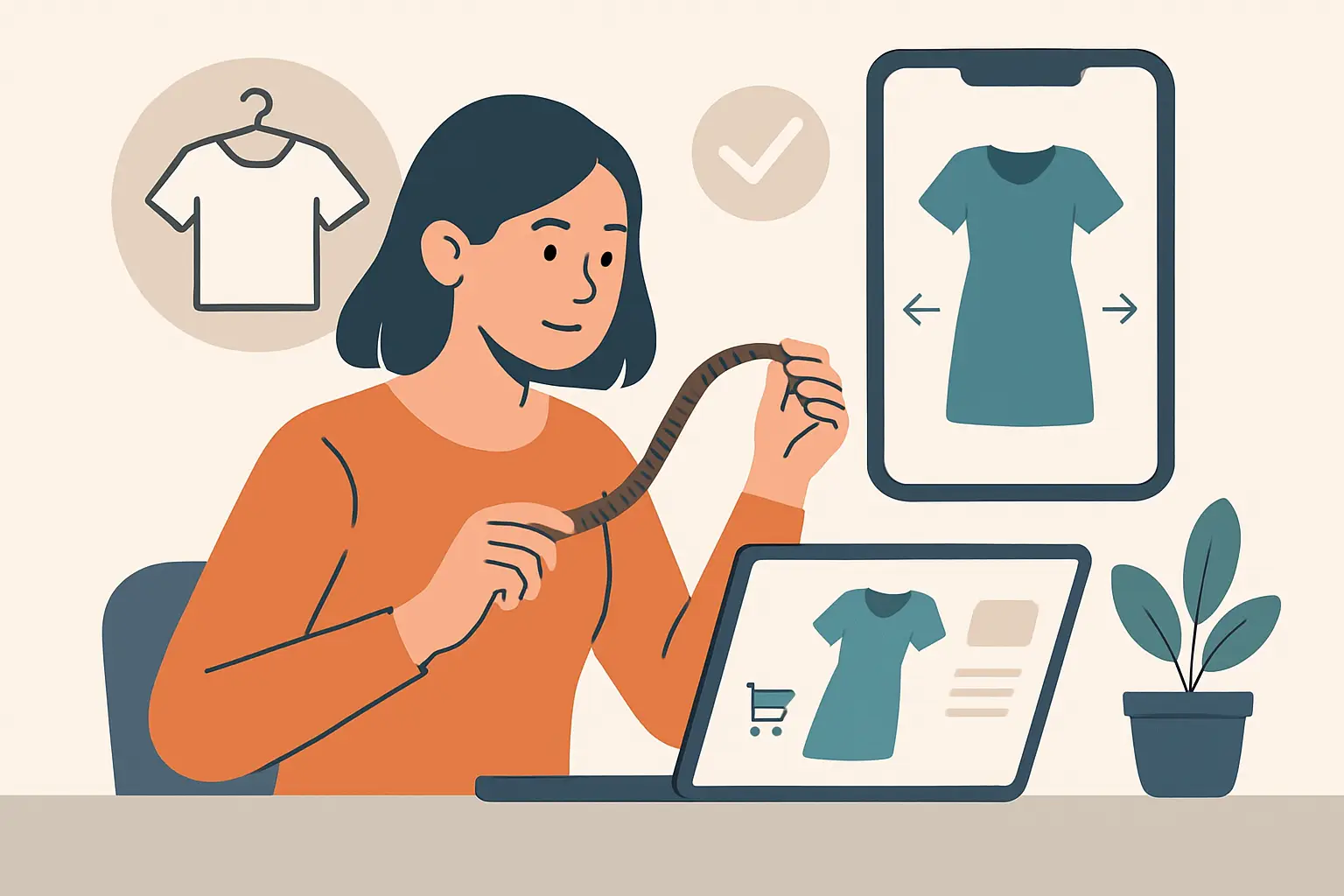
You find the perfect jacket at 11:47 pm. The photos look great. The model looks effortless. Then you hit the only question that matters: will it actually fit you, or will it become a return label you never asked for?
Fit uncertainty is the number one friction point in online shopping because sizing is not a standard. A “medium” can be relaxed in one brand, slim in another, and wildly different across categories like denim, dresses, and outerwear. The good news is you can get to a confident yes without guessing - if you know what to look for.
How to know if clothes fit online starts with your real measurements
If you only do one thing, do this: shop with your body measurements, not your usual size.
Most returns happen when people buy their “normal” size and hope the brand matches their mental map. Instead, treat your measurements like a key that unlocks every size chart.
Measure three to five points once, save them in your Notes app, and reuse them:
- Bust or chest (fullest part)
- Waist (natural waist, not where your jeans sit)
- Hips (fullest part)
- Inseam (for pants)
- Shoulder width (especially useful for blazers, coats, structured tops)
A flexible tape measure is ideal. If you do not have one, use a string and measure it against a ruler. Keep the tape snug, not tight. If your measurement lands between two sizes, that is not a problem - it is information you will use with fabric and cut.
Don’t skip garment measurements when they’re available
Some brands provide garment measurements (the actual item dimensions) instead of body measurements. That can be even better, but only if you compare correctly.
Body measurements tell you what size the brand expects you to be. Garment measurements tell you what you are buying. If a shirt’s chest measurement is 40 inches and your chest is 38, that gives you 2 inches of ease. Whether that is perfect or too tight depends on the style. A slim knit tee might feel fine with 2 inches. A button-up you plan to layer might need 4 to 6.
Read the size chart like a strategist, not a shopper
Size charts are often accurate, but shoppers misuse them. The fastest way to get value is to identify which measurement controls the fit for that garment.
For fitted dresses and bodysuits, bust and hips usually decide the size. For high-rise pants, waist and hip matter more than inseam. For oversized hoodies, shoulder and chest matter, while waist may not.
Also watch for this quiet detail: some charts list ranges, like “Waist 28-30.” If you are at the top of the range and the fabric has low stretch, you will likely prefer sizing up.
If the chart is missing, use brand consistency signals
Sometimes the chart is vague or not present at all. When that happens, look for consistency clues: does the retailer show the model’s height and size? Are there multiple items from the same brand with similar fit notes? Brands that invest in fit data tend to stay consistent within a category.
If there is no model info, no chart, and no fit notes, you are shopping blind. That does not mean you cannot buy - it means you should pick items where exact fit is more forgiving, like relaxed sweaters, scarves, roomy jackets, or adjustable pieces.
Fabric tells you what the photos can’t
Two garments can have identical measurements and fit completely differently. That is fabric behavior.
If you want to know how to know if clothes fit online, learn a few fabric rules that predict comfort and shape.
Stretch fabrics forgive. Look for elastane, spandex, or “stretch” language. A denim with 1-2% stretch is mildly forgiving. Leggings with 15% stretch are a different world.
Woven fabrics hold their shape. Cotton poplin, linen, and many suit fabrics will not give you much. If your measurement is borderline, size up.
Rib knits and jersey drape and cling. They can be flattering, but they also reveal fit issues quickly. If you dislike cling at the waist or hips, pick your size based on the area you want to feel most comfortable.
Thick fabrics change the fit. Heavy sweaters and structured coats can feel tighter than their measurements suggest because the fabric adds bulk. Plan a little extra room for layering.
Use fit language to decode the cut
Product descriptions are full of “vibes,” but there are real fit clues hiding in plain sight.
“Slim fit,” “bodycon,” and “tailored” usually mean less ease. If you are between sizes, size up unless the fabric is highly stretchy.
“Relaxed,” “oversized,” and “boyfriend” indicate more ease, but the shoulder seam placement matters. Oversized done right looks intentional. Oversized with a shoulder that lands mid-bicep can look sloppy if you are petite or narrow-shouldered.
“Cropped” is about length, not size. People often size up to get more length and then end up with a garment that is too wide. If length is your issue, look for tall sizing or check the listed garment length.
“High rise,” “mid rise,” and “low rise” are not standardized. Use the rise measurement when it is provided. If it is not, look at where the waistband sits on the model and compare their height to yours.
Model photos and reviews can mislead - unless you read them correctly
Model photos are aspirational, but they are also a data source.
If the site lists the model’s height and the size they are wearing, you can estimate proportions. A 5'10" model in a small tells you a lot about length. If you are 5'3", that same dress may hit your knee instead of mid-thigh.
Reviews are useful when they include specifics. “Runs small” is vague. “I’m 5'6", 145, usually a 6, and the waist was tight” is actionable.
When reviews conflict, it often means one of three things: the item has inconsistent manufacturing batches, the fabric behaves differently across body shapes, or the cut is intentionally unusual. In those cases, choose a retailer with easy returns or pick a different piece.
The fast check for tricky categories
Some categories are fit traps online because small differences feel big once you wear them.
Denim and pants
Waist and hip ratios are everything. If you have a larger hip-to-waist difference, look for “curvy fit” or denim with stretch. If you are straighter through the hips, rigid denim can fit beautifully but punishes sizing errors.
Also pay attention to thigh and rise. A pair of jeans can “fit” at the waist and still feel unwearable if the thigh is too slim or the rise is too short for your torso.
Blazers and coats
Shoulders decide the look. If the shoulder seam is past your shoulder bone, it reads oversized. If it is inside the shoulder, it can look tight and restrict movement. If you plan to wear layers, buy for the largest layer you will realistically wear.
Dresses
Dresses are often a blend of two fits: top fit and bottom fit. If you are fuller in the bust, prioritize bust and choose silhouettes that give you room at the waist and hips, like wrap styles or fit-and-flare shapes.
Shoes (bonus reality)
Sizing is even less standardized than clothing. If you cannot try on, buy from retailers with easy exchanges. Width matters as much as length, and reviews that mention “narrow” or “wide” are gold.
Virtual try-on: the confidence shortcut when size charts aren’t enough
Even with perfect measurements, you still have the hardest question: how will it look on you? Not on a model. Not on a mannequin. On your proportions, your posture, your styling.
That is where virtual try-on earns its keep. Instead of translating charts in your head, you can see a realistic overlay of an outfit on your own body, catch issues like awkward length, tight-looking areas, or a silhouette that just is not you.
If you want a fast, privacy-first option, Prova processes a full-body photo in about 10 seconds, uses encrypted connections, and automatically deletes your photo after processing. It also lets you save looks in My Wardrobe so you can compare options side-by-side before you buy.
Virtual try-on is not a replacement for measurements - it is the visual layer that measurements cannot provide.
The trade-offs: what you still can’t know until it arrives
Online fit prediction can get very close, but there are a few variables you should treat honestly.
First, comfort is personal. Two people with the same measurements can prefer different ease. Second, fabric hand-feel is hard to judge from a product page. “Soft” can mean brushed and cozy or thin and drapey.
Third, brands sometimes change patterns over time. If you loved last year’s version of a style, this year’s update might fit differently even with the same name.
When the item is high-stakes - a suit for an event, a dress for photos, boots you will wear daily - plan a backup option or order two sizes if returns are painless.
A simple decision rule that saves time
If your measurements align cleanly with one size, buy it.
If you are between sizes, decide based on what you cannot tailor easily. It is usually easier to take in a waist than to add room to shoulders, hips, or thighs. Length can sometimes be hemmed, but proportions cannot.
And if you are still unsure after checking measurements, fabric, cut language, and reviews, trust the signal: uncertainty is data. Choose a more forgiving silhouette, or use a visual try-on so you are not betting on hope.
The best online shopping feeling is not “I got lucky.” It is knowing you made a smart call before you clicked Buy Now - and having your closet prove it when the package shows up.