You know the moment: you have 12 tabs open, two sizes in your cart, and zero confidence it will look the way it does on the model. You are not shopping for “a shirt.” You are shopping for the version of you that shows up when the fit is right.
That is the real promise behind an ai outfit recommendations app - not generic style quotes, but faster certainty. The best ones act like a personal stylist and a fitting room that fits in your pocket. The worst ones give you the digital equivalent of “try jeans with sneakers” and call it intelligence.
What an ai outfit recommendations app should do (and what it shouldn’t)
At its best, an ai outfit recommendations app answers three questions quickly: What should I wear, will it actually look good on me, and can I trust the process. If it misses any of those, you are back to guesswork.
Recommendations without realism are just opinions. If an app tells you to wear a cropped jacket but cannot show you where it hits on your torso, it is not saving you time - it is creating new decisions. On the flip side, photoreal try-on without outfit logic can still leave you stuck. You can see one item on your body, but you are still piecing together the full look.
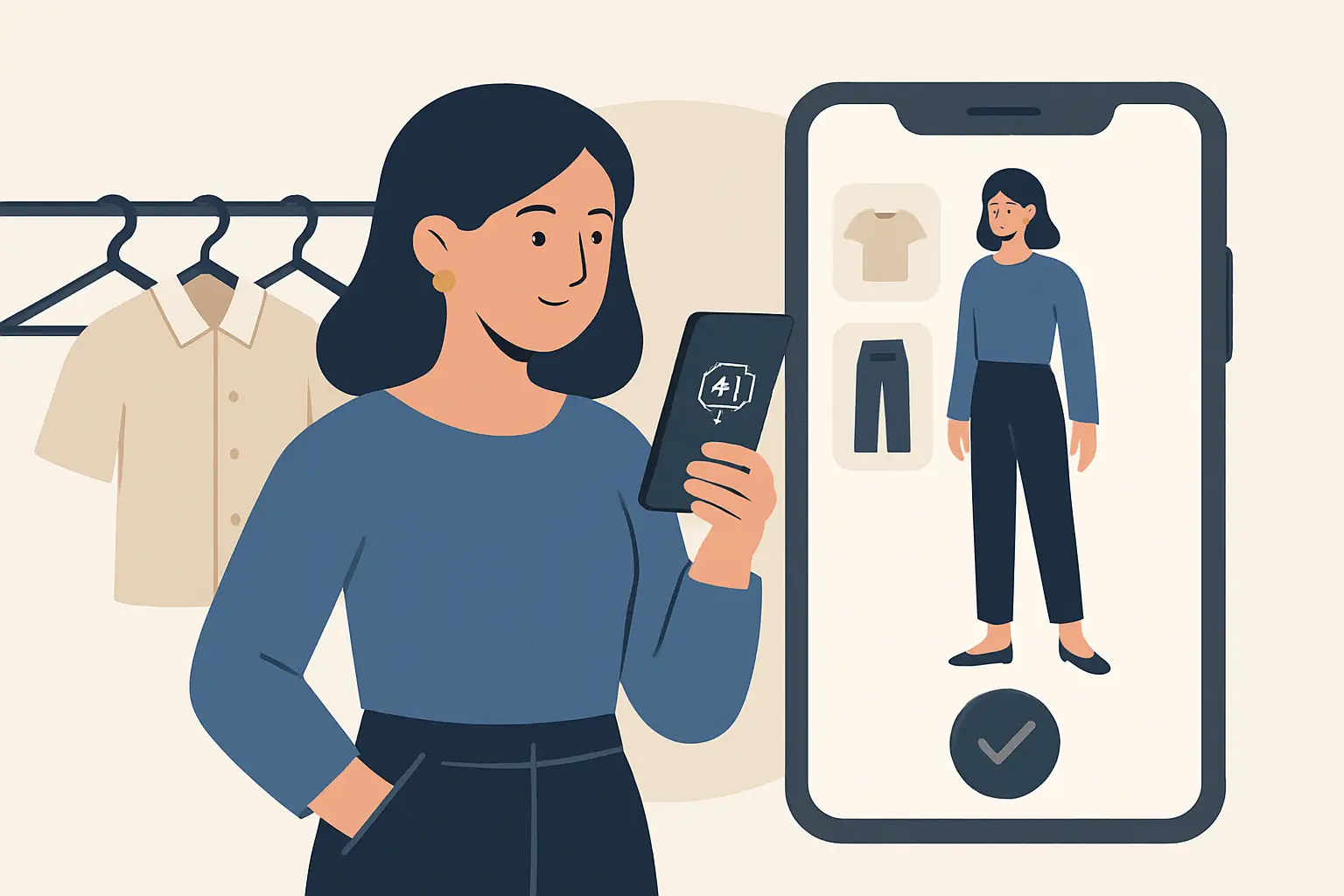
The sweet spot is when recommendations and try-on work together. The app suggests combinations based on your context (weather, occasion, style goals) and then lets you visually validate the outfit on your own body in seconds.
Why AI recommendations can feel “right” faster than you can
Most people do not struggle with style because they lack taste. They struggle because shopping environments are noisy: inconsistent sizing, lighting tricks, posed models, and a return process that punishes experimentation.
AI can reduce that noise by narrowing choices using signals you already generate. Items you save, outfits you revisit, colors you repeat, silhouettes you avoid, and even the patterns you try once and never touch again - those behaviors are clearer than a quiz you rushed through.
This is also where “it depends” matters. If your wardrobe is consistent and you know what you like, AI helps you move faster and catch smarter combinations you might overlook. If you are rebuilding your style from scratch, AI can help, but only if it gives you control to steer it. Recommendations should be adjustable, not preachy.
The missing piece: fit confidence, not just outfit ideas
Outfit recommendations are only useful when they survive the most brutal test: your mirror.
Fit is where most online shopping fails. Two mediums can fit like two different garments. A fabric can cling or drape. A hem can hit at the least flattering point on your leg. When an app can show an outfit on your body - not a body like yours, your actual body - you stop buying hopes and start buying decisions.
This is why virtual try-on changes the whole category. Instead of “this would look cute,” you get “this is how it sits on my shoulders” and “this color actually works with my skin tone.” That shift reduces returns and the mental tax of shopping.
The workflow that separates gimmicks from real value
A good app does not ask you to become a content creator. It should feel like a quick loop: upload a full-body photo, pick items, get a realistic result, save or share, repeat.
Speed matters more than most people admit. If you have to wait a minute for each look, you will stop experimenting. If you get results in about 10 seconds, you will try three outfits instead of one, and you will make better calls. Fast processing is not a nice-to-have - it is what turns AI styling into a habit.
The second make-or-break detail is organization. Outfit ideas that disappear are not helpful. Look history is how you learn your own style. When you can save outfits, compare versions, and revisit what worked, the app becomes a personal catalog, not a one-off demo.
What to look for in a privacy-first AI styling experience
This category runs on photos. That means trust is part of the product.
You should not have to read a legal novel to feel safe. The app should say clearly what happens to your image, how it is transmitted, and whether it is stored. Encrypted connections are table stakes. Automatic deletion after processing is a strong signal that the company is minimizing risk on purpose, not just talking about it.
Here is the trade-off: some features get better with long-term memory. If an app stores your wardrobe and your saved outfits, that can improve recommendations. But storing your original photos indefinitely is a different decision. The best apps separate convenience from exposure, keeping what you choose to save while minimizing sensitive image retention.
How to get better recommendations from an ai outfit recommendations app
AI is not magic. It is a feedback system. If you want it to feel personalized, you have to give it clean signals.
Start with one clear intent. Are you dressing for work, a date, a conference, a weekend errand run, or a photo-heavy event. “Casual” is not enough. A casual outfit for a coffee shop is different from casual for a friend’s birthday dinner.
Then focus on repeatable constraints. Pick two: comfort level, temperature, formality, color palette, or body areas you like to highlight. When the app learns your non-negotiables, it stops recommending outfits that look good in theory and fail in practice.
Finally, save aggressively. The outfits you save become your training data. Even better, save near-misses. If you liked the top but hated the pants, that is valuable. The app should learn from your actual decisions, not from what a trend report says you should like.
The real benchmark: fewer returns, faster yes
If you are judging apps by how “cool” the AI sounds, you will end up with demos. Judge by outcomes.
A strong app should reduce the number of backup sizes you buy “just in case.” It should cut down on try-and-return cycles. It should help you commit faster without that lingering doubt that leads to abandoned carts.
There is also a quieter win: fewer outfits that only work as standalone pieces. Recommendations that consider your wardrobe help you buy items that integrate. That is how you build a closet that gets worn, not a closet that gets scrolled past.
Where apps still fall short (and how to use them anyway)
Even the best systems have limits. Fabric behavior is hard. Sheer materials, high shine, and heavy texture can be tricky. Lighting differences between product photos and your photo can shift colors. And personal style has mood swings that no algorithm can predict perfectly.
The way to win is to treat AI as your first draft, not your final judge. Use it to explore silhouettes you would not try in a dressing room. Use it to validate proportions before you buy. Then make the human call.
If an app is consistently wrong about one category - like recommending oversized looks when you prefer tailored - the fix should be simple. You should be able to steer it with quick feedback, not start over from scratch.
A practical example: building a “go-to” outfit library
If you want immediate payoff, build a small set of saved outfits you can reuse.
Create three versions of your everyday uniform: one for warm weather, one for cold weather, and one that looks polished on camera. Then create two “event” outfits: one for a nicer dinner and one for something unpredictable like a last-minute invite.
When you have five reliable looks saved, shopping changes. You stop browsing randomly and start shopping to upgrade a specific outfit slot. You can test new items against looks you already know you wear. That is how you avoid buying pieces that only look good in isolation.
Where Prova fits if you want speed plus realism
If your priority is seeing outfits on your body quickly, Prova is built around near-instant virtual try-on, strong privacy cues like encrypted processing and automatic photo deletion, and a “My Wardrobe” approach that keeps your saved looks organized for repeat decisions.
The point is not to turn shopping into a tech project. It is to make the decision loop shorter: try, compare, save, and move on.
The future of AI outfit recommendations is more personal, not more complicated
The next wave will not win by adding more filters. It will win by getting closer to your real life: your calendar, your climate, your actual closet, and the way your style changes depending on where you are going.
When an ai outfit recommendations app does it right, it feels like you gained time. You stop second-guessing. You buy fewer things that sit unworn. You get dressed faster, and you like what you see.
Pick the app that makes you say “yes” sooner - and protects your trust while it does it. Your style does not need more noise. It needs a faster path to confident choices.